Friday, 29 January 2010

Bessacarr

My late aunt lived in a village on the edge of Doncaster called Bessacarr. You’d think it would be pronounced ˈbesəkɑː. But you’d be wrong: it’s ˈbesəkə.
The weakening of unstressed vowels is one of the trickiest areas in the pronunciation of British proper names. Those who first encounter them in writing tend to make them strong, while those who have local/personal familiarity with them know to weaken them.
The town of Todmorden in the Pennines (pictured) is most usually ˈtɒdmədən or just tɒd, though you can also hear ˈtɒdmɔːdən. (According to Wikipedia it can also be ˈtɔːmdn, though I rather suspect that this is no more than a Wikipedia contributor’s joke, particularly since English phonotactic rules would require an extra schwa, ˈtɔːmdən.)
In North Yorkshire there’s a village called Dishforth. It has an RAF station generally known (I think) as ˈɑːr eɪ ef ˈdɪʃfɔːθ. But the locals call their village ˈdɪʃfəθ.
I was at school with a chap called Spofforth ˈspɒfɔːθ. But the village of Spofforth near Harrogate is ˈspɒfəθ, which according to the BBC Pronouncing Dictionary is also for that matter the usual pronunciation of the surname.
Most English villages called Marden are of course ˈmɑːdn. But the one in Kent is also sometimes mɑːˈden.
Spelling pronunciation is a powerful influence. The place I know as ˈæskət, Ascot in Berkshire, is often heard as ˈæskɒt.
Even in America things are not necessarily as you might expect. Think of Poughkeepsie pəˈkɪpsi.

Thursday, 28 January 2010

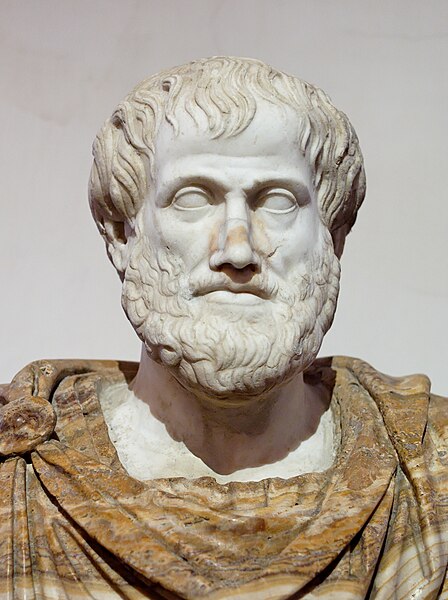
Aristotle

Kevin Tang asked me about the pronunciation of the name of the Greek philosopher Aristotle.
I pronounce it with the stress on the first syllable, ˈærɪstɒtl, and that is the only stress pattern I show in LPD.
Kevin, who is a Cantonese speaker from Hong Kong, says he has always pronounced it with the main stress on the third syllable (-tot-), and has discovered that an on-line pronunciation dictionary, howjsay, seems to agree with him.
I should explain that the website in question is “A free online Talking Dictionary of English Pronunciation” in which you can call up a sound file of any of some 128,000 words. They are all spoken, I think, by the author of the website, Tim Bowyer, who is clearly British. Jack Windsor Lewis blogged about this site a few days ago.
And it’s true: Tim pronounces ærɪsˈtɒtl. Listen!
What can I say? I told Kevin
My reaction would be that this is simply an error, or more politely an
idiosyncratic pronunciation.
People who have not been taught classics or philosophy by a live teacher can easily create idiosyncratic pronunciations on the basis of the spelling, because (as you well know) English spelling does not clearly indicate pronunciation.
Classicists and philosophers, believe me, stress Aristotle on the first
syllable.

At least Tim Bowyer pronounces epistle, apostle and pestle the way I do.
It is not 100% clear to me just why Aristotle is pronounced the way it is. Given his Greek name Ἀριστοτέλης Aristotélēs, you would expect him to have the same name in English, Aristoteles, and for it to be pronounced ˌærɪˈstɒtəliːz. (Compare Praxiteles.) Like other Greek names, it would have passed through Latin and become subject to the Latin stress rule (light penultimate syllable, therefore antepenultimate stress).
But this must be one of the rather few classical names that has taken on a distinctive English form rather than keeping the Latin form. Other examples would be the Roman/Latin names Livy ˈlɪvi for Livius, Ovid ˈɒvɪd for Ovidius, and Horace ˈhɒrɪs for Horatius and the Greek names Homer ˈhəʊmə for Ὅμηρος, Hómēros (Latin Homerus), Hesiod ˈhiːsiəd for Ἡσίοδος Hēsíodos (Latin Hesiodus), and Pindar ˈpɪndə for Πίνδαρος Pindaros (Latin Pindarus). I don’t know why we have these special English forms: for most classical names we just stick with the Latin.
To get back to Aristotle: given the underlying representation ærɪstɒtl with a final non-syllabic l, Chomsky and Halle’s SPE rules would predict that the main stress would indeed fall on the heavy final syllable (i.e. on the ɒ), but that the word would then be subject to the Alternating Stress Rule moving the main stress back to the initial syllable (i.e. stressing the vowel æ). Result!
So the pronunciation favoured by Kevin and Tim would constitute an exception to the ASR, in just the same way as words such as final-stressed guarantee, macaroon, chimpanzee etc. are exceptions to it. The pronunciation favoured by everyone else would be the regular one.

Wednesday, 27 January 2010

language manglers

People who write to the papers about language issues do get awfully confused.
There’s been a good deal of discussion in the media recently about teenagers’ supposed limited vocabulary. People have been saying and writing a lot of nonsense about it, as ably exposed by David Crystal.
Now someone writes to the Sunday Times to defend teenagers… by blaming “captains of industry”.No, Mr Allen, your examples fone, fayre, lite, snax, bitz and center are not “words”, still less words that have just been made up by marketing departments. They are spellings.
Spellings are different from words. You are not complaining about words, and your comments are not relevant to the question of vocabulary size. You’re complaining about spellings.
The words we conventionally spell fair, light, snacks, bits and (BrE) centre have been in English for many centuries. Even the word conventionally written phone is more than a century old, being dated by the OED to 1880 — long before “the mighty supermarkets” existed.
As for the word you would like everyone to write as centre, I think you should bear in mind that well over half the native speakers of English in the world spell it as center, a spelling that has been around since the sixteenth century. The sky has not yet fallen in.
Nor is anything whatsoever threatened by people sometimes spelling naɪt as nite. (According to the OED, they’ve been doing that too since the 16th century.) Supermarkets indeed have to make a commercial judgment about whether using common-sense spellings of this sort will attract more customers than it will repel. But there is no moral issue involved.
And I can’t see how it could affect anyone’s vocabulary size.

Tuesday, 26 January 2010

pestle

There are words that we read before we hear. We guess their pronunciation on the basis of the spelling. Unfortunately, the indications given by the spelling are quite often inadequate. Here’s part of what I said about “spelling pronunciation” nearly thirty years ago, in AofE.What I do find surprising, though, is that people are often unaware of very robust sub-regularities in our spelling system.
What do we know about words with the spelling -stle? Think of nestle ˈnesl, trestle ˈtresl, wrestle ˈresl. Think of castle, thistle, whistle, epistle, bristle, gristle, jostle, apostle, bustle, hustle, rustle. In all of these the t is silent. There are no exceptions: no words with this spelling in which it is usual to pronounce t. (Compare pistol ˈpɪstl, crystal ˈkrɪstl, etc., with a different spelling.)
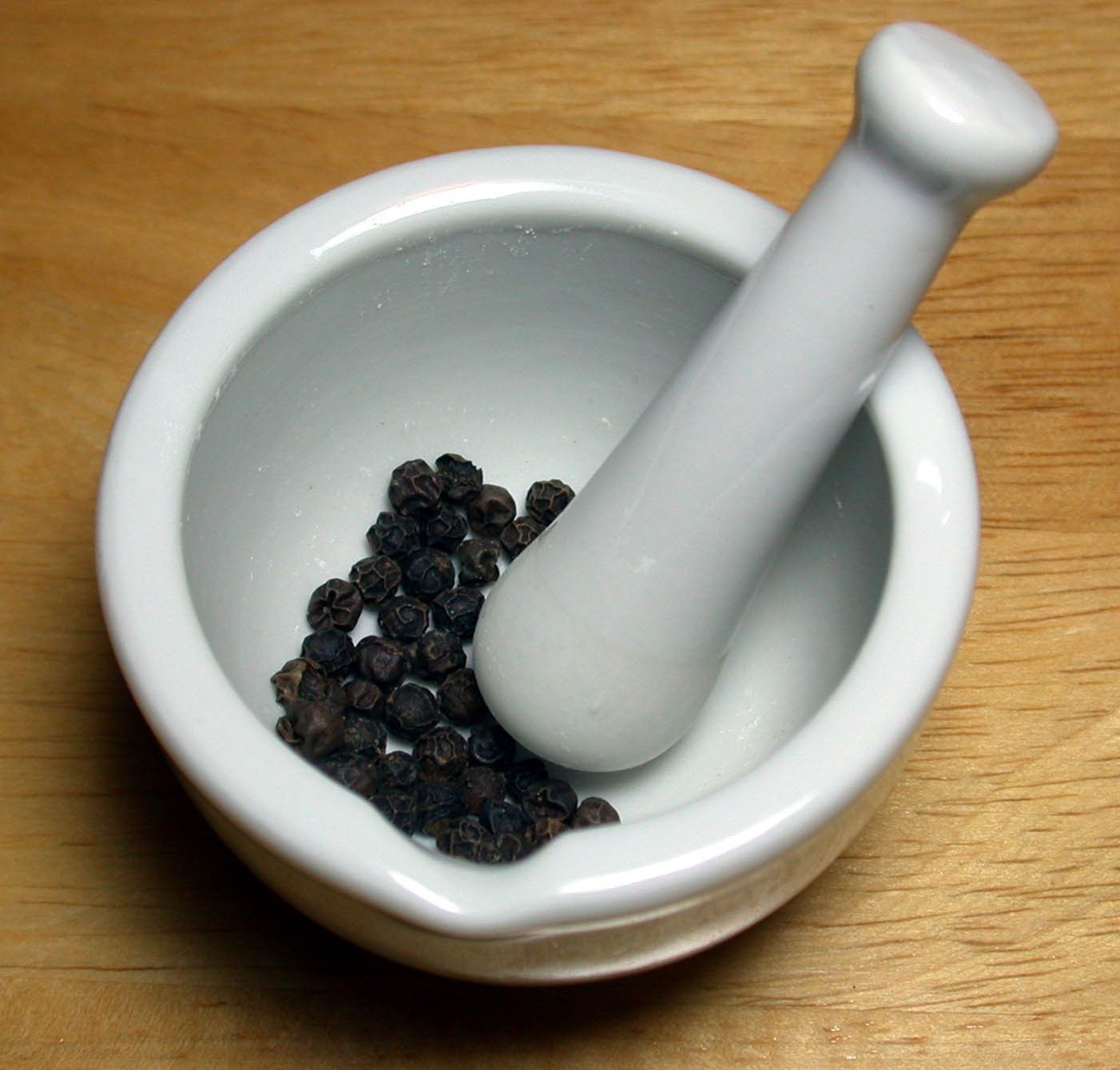
So how is it that Neil MacGregor, presenting a BBC R4 series entitled A History of the World in 100 Objects, thinks that the thing that goes with a mortar to grind up grain and spices is a ˈpestl? (You can listen to the programme here, but only for the next few days.)
He is not the only one. Rather reluctantly, I included the -t- form as a secondary variant for pestle in LPD, as do some other dictionaries.
Nevertheless, as the spelling pestle indicates to anyone who is sensitive to this subregularity, it’s usually a ˈpesl . The word rhymes with vessel. Indeed, in the Neil MacGregor programme one of the interviewees, the food writer Madhur Jaffrey, uses the expected pronunciation ˈpesl .
In pre-Gimson editions of EPD you can read DJ’s tactful comment
Note.—The form ˈpesl is usual among those accustomed to make frequent use of a pestle and mortar.

Is this the only case of -stle spelling pronunciation? Or are there people out there who think that Jesus had twelve əˈpɒstlz and that Paul wrote ɪˈpɪstlz?

Monday, 25 January 2010

Öxarfjörður, not Øxarfjørdur

Eighteen months ago (blog, 26 Aug 2008), I congratulated the Guardian newspaper on its newfound ability to cope with the typographical complexities of Czech orthography. It was nice to see accented letters such as ě and ř correctly printed in the paper.
Yet the “Grauniad”, once upon a time notorious for its then abundant misprints, still does not always get it quite right. Its travel supplement recently carried a piece about an Icelandic destination it identified as “Øxarfjørdur”.
Er… I thought it was only Danish and Norwegian that used the letter ø in their orthographies (oh, and Faroese).
Yes indeed. The correct spelling of the place in Iceland is Öxarfjörður.
Which brings me to the question of typing such letters when you need them in a document.
Users of Word very often have no idea how to type them when they’re not immediately available on the keyboard. They don’t know about Word’s “keyboard shortcuts for international characters”.
In Word you do Ctrl-', a to get á, Ctrl-', e to get é, and so on. With Ctrl-: plus the vowel letter you get an umlaut (diaeresis, trema), as in ä, ö, ü. With Ctrl-ˆ you get circumflexed vowels, with Ctrl-` grave accents. Even less well-known, I suspect, are Ctrl-/, o for ø and Ctrl-', d for ð. Every phonetician should know these last two, together with Ctrl-&, a for æ and Ctrl-&, o for œ.
In this way you can get all the accented letters needed for West European languages (including Icelandic but not including Welsh), without resorting to Insert Character or customized shortcuts. (I was appalled to see an article in a recent issue of the Linguist explaining how to create elaborate macros just to get the letters you need for French, German and Spanish — entirely unnecesssary.)
It’s a pity that the Microsoft programmers stopped there: why can’t we have the Ctrl-' trick not just for áéíóúý but also for ćńŕśź? Why can’t we use Ctrl-^ for ĉĝĥĵŝŵŷ? And so on?

The Windows operating system itself offers some further posibilities. In the UK we all know that to get the euro symbol, , we do AltGr-4. We can also use the AltGr key to get acute accents on vowels: for example AltGr+a gives you á. In other locales there are other possibilities (see here). These keyboard shortcuts are determined by the operating system, so work in any application (whereas the Word ones only work in Word).

Friday, 22 January 2010

aw, shucks

Phonetic symbols are not magic. And there is no super-phonemic system somewhere in the sky, consisting of universal sounds in one-to-one relationship with IPA symbols. Rather, the IPA (or any other symbol system) offers us a battery of rather vaguely defined symbols on which we can draw in order to refer to human speech sounds in the real world, or to abstractions from them.
Faced with an unknown language, or in the phonetics classroom with general-phonetic nonsense words, we produce an ‘impressionistic’ transcription that makes no prior assumptions about phonemic categories. We can, if we choose, use all manner of unusual letters and diacritics to record subtleties that we may have observed. On the other hand we may start out pretty unsubtle and then subsequently need to refine our transcription (make it “narrower”) if we find that we are overlooking subtleties that turn out to be important in the language concerned.
But when we want to use IPA symbols in a dictionary or language textbook, that sort of thing won’t do. There, we need a simple straightforward system that is not burdened down by unnecessary complications. In transcription systems there is always a trade-off: we can either show subtle details in the “text” (the dictionary entries, the transcribed passages), which makes the text complicated and difficult to follow — particularly for language learners who do not wish to be phonetics specialists — or we can reserve these details to the “conventions”, the rules for interpreting particular symbols in context in the language in question.
That is why pedagogical transcriptions are normally phonemic rather than allophonic.
Jerry Friedman wrote
I hope you can answer a question that I've asked unsuccessfully on
linguistics forums. Is there an IPA symbol for the General American realization of /ɔ/ that distinguishes it from RP /ɔ/, not to mention French and other versions? (My pronunciation of THOUGHT-class words and some others is pretty close to GenAm.)
while Bao Zhi-kun, a Chinese teacher of English, wrote
We know that the vowel in the words like “talk”, “call”, “law”, “bought” is pronounced differently in BrE and AmE: /ɔː/ in BrE but /ɒ/ in AmE. Why is this difference not shown in your LPD?

So the answer to Jerry Friedman is that there are several possible symbol choices that would bring out this difference. (Let’s overlook the problem of defining what exactly might be meant by “the” General American realization of the THOUGHT vowel. And let’s ignore the fact that about half of all Americans use their LOT vowel in THOUGHT words.) We could attach a diacritic to the RP symbol to show that the vowel is closer or more rounded than the GenAm: we could write ɔ̝ː or ɔ̹ː. Or we could even decide to write it . Or we could attach a diacritic to the GenAm symbol to show it as opener or less rounded: ɔ̞ or ɔ̜. (It is not typographically practicable to place two inferior diacritics toɡether on this symbol.) Or we could decide to write it ɒ (though that would create confusion for those accustomed to the use of this symbol for the intrinsically short vowel of RP LOT). If we were concerned only with AmE, we would use no length marks, since the length distinctions of RP are irrelevant in GenAm.
In the first edition of LPD I actually represented the AmE THOUGHT vowel as ɒː, differently from BrE ɔː, which would have pleased Bao Zhi-kun. But in the second edition I decided to use the symbol ɔː for both varieties. Apart from anything else, this makes for simpler entries, since the same transcription of words like thought θɔːt and law lɔː will do for both BrE and AmE.
So the same symbol e will do for the very different qualities of the DRESS vowel that we find in various kinds of BrE and AmE. The same symbol æ will do for very divergent qualities of TRAP. And the same symbol ɔː will do for different kinds of THOUGHT.

Here’s a rather different kind of example: we use the symbol l for the lateral approximant of many different languages. But in reading a transcription of German you have to remember to make it very clear; in French clear, but not quite so clear as in German; for most kinds of English it is generally darker, and may vary in colouring according to position; in Korean it has a noticeably retracted place of articulation; in some languages it is dental rather than alveolar. We don’t want to be bothered with such detail at every relevant dictionary entry: it’s better to just learn and remember that such-and-such a language or variety has such-and-such a quality of sound.
OK, Jerry, the French open-mid back vowel is rather centralized. But in a pronunciation dictionary of French it still makes sense to write it ɔ, rather than fussing about with ɔ̈ or the like.

If you want to speak RP-ish BrE you need to learn to use the actual sounds that are appropriate. It’s not sufficient to draw on some general-phonetic battery of universal sounds. Likewise if you want to speak network-standard GenAm. You have to establish an entire setting for the sounds of one variety or the other, and then operate within that setting — not faff around with transcriptional complications.

Thursday, 21 January 2010

everyday (?) IPA

Philip Swan, an SIL-trained Australian phonetician, has put up a nice video on YouTube. It consists of three parts: using the IPA to transcribe what a toddler says, using phonetic description for clarity in identifying letters of the alphabet over the phone, and transcribing paralinguistic interjections.
I became aware of the existence of this video from postings on the email list of VASTA, the (American) Voice and Speech Trainers Assn. Inc. Some of the commentators there were sceptical about the accuracy of the transcriptions.
I think that writing the Australian FACE vowel as [æi] is not unreasonable. I have to say, though, that superscripting the [i] symbol to show the less prominent part of a diphthong, as Philip Swan does in his [æi], is not an IPA-approved notation. (If you want to explicitly show “non-syllabic” in IPA, the correct diacritic is meant to be U+032F, a COMBINING INVERTED BREVE BELOW, thus [æi̯].) I am less than enthusiastic, though, about transcribing the Australian PRICE vowel as [ʌɪ], or as Swan has it [ʌɪ]. I would have thought that the first element was usually nearer to fully open cardinal [ɑ] than to open-mid cardinal [ʌ], let alone the Australian STRUT vowel. (Is this the baleful influence of Clive Upton’s unfortunate choice of symbol for the PRICE vowel in the OED/COD?)
I have no idea what the toddler is saying, or trying to say. Has anyone?
To disambiguate letter names in noisy conditions, articulatory descriptions would only work if both parties are well trained in phonetic terminology — which they normally aren’t. That’s why we use keywords: “S as in Sugar, not F as in Freddie”, or “sierra whisky alfa nectar November”.