skip to main |
skip to sidebar
 How do you pronounce aged?
It depends on where it stands in the sentence. If it is used attributively, before a noun, meaning ‘(very) old’, then it has two syllables, ˈeɪdʒɪd (or, for some, ˈeɪdʒəd). This is what you say in an aged woman or my aged parents. It is also the pronunciation we use in, for example, care of the aged, where you could argue that it is used attributively before a deleted (understood) noun people.
But when it is used predicatively, meaning ‘having a specific age’, then it is pronounced as a monosyllable, eɪdʒd. This is what you say in children aged 5 or over or a man aged between 30 and 35.
There are one or two other -ed words that vary in the same fashion, notably blessed. Attributively, disyllabic: a moment of blessed silence; where’s my blessed notebook? Predicatively, monosyllabic: we’re both blessed with good health; the couple had their marriage blessed (by the vicar). Against this rule, however, in the hymn Our blessed redeemer, ere he breathed | his tender last farewell the word has to be pronounced as a monosyllable despite being attributive.
There’s also accursed, which for me is always əˈkɜːsɪd. But others always say əˈkɜːst. Others again may vary as with aged and blessed. In modern English, though, the word is really only used attributively: we say all this accursed mud, but not ?all this mud is accursed.
As we all know, there are a few adjectives in -ed in which the ending is irregularly pronounced as a separate syllable, i.e. against the rule that this pronunciation belongs only after stems ending in t or d. Examples are crooked, learned, naked, rugged, wicked, wretched, all disyllabic. (But as verb forms, crooked and learned are monosyllabic: she crooked krʊkt her finger, he learned lɜːnd what had happened.)
Derived forms in -edly and -edness seem mostly to have the syllabic pronunciation. So markedly and markedness have three syllables each, while supposedly and allegedly have four. But there are also those that have a nonsyllabic ed: determinedly, ill-favouredness, good-naturedness. I think shamefacedly can go either way.
I heard Judge Judy on television speaking of someone’s əˈledʒɪd crime. But I think we normally say əˈledʒd, and that her pronunciation (possibly a one-off slip) was a back-formation from allegedly. So when she said your alleged striking of the defendant with trisyllabic alleged she was thinking of the underlying unnominalized you allegedly struck the defendant.
_ _ _
This blog will be suspended for the month of August. During this time I may possibly see some of you face-to-face at the UCL Summer Course in English Phonetics in London or at the International Congress of Phonetic Sciences in Hong Kong.
Next posting: 1 September.
Phonetic-symbol anoraks/nerds/geeks can have hours of fun browsing the Unicode Standard, the repository of all the characters that can be displayed on a modern computer screen (blog, 22 Jan 2007). If you haven’t got the book (which is hefty), browse online.
Now there’s a new version of the Standard, 6.0 (well, it came out last October, actually). Unlike previous versions, it has not been published as a printed book, but is available only online.
So what’s new in version 6.0? In brief: there are 2,088 new characters, including (I quote)
• over 1,000 additional symbols—chief among them the additional emoji symbols, which are especially important for mobile phones
• the new official Indian currency symbol: the Indian Rupee Sign
• 222 additional CJK Unified Ideographs in common use in China, Taiwan, and Japan
• 603 additional characters for African language support, including extensions to the Tifinagh, Ethiopic, and Bamum scripts
• three additional scripts: Mandaic, Batak, and Brahmi
There are also extensive technical changes to do with character properties and format specifications.
Two new Cyrillic characters cater for Azerbaijani. Two new Arabic characters and ten new Devanagari characters cater for Kashmiri. Thirty-two new Ethiopic characters cater for Gamo-Gofa-Dawro, Basketo, and Gumuz. Complete new blocks of letters cater for Mandaic, for Batak, and for Brāhmī.
Is there anything of particular interest to phoneticians and IPA users?
How about a symbol for a voiceless retroflex lateral fricative? A sort of combination of ɬ and ɭ? It’s not (yet) an official IPA symbol, but it’s a logical combination of two. Here it is, U+A78E. (Unicode numbers are given in hexadecimal and prefixed with the identifier U+.) 
If you’ve always wanted a COMBINING DOUBLE INVERTED BREVE BELOW, it’s now available. But unless you’re a Uralic Phonetic Alphabet aficionado, you’ll have managed without.  Do you have a use for subscript h k l m n p s t? I doubt it. Even if you do, you’d probably simply use the subscripting tag <sub> </sub>, as I have just done. In Unicode 6.0 they’re ready-made at U+2095 to U+209C.
Students of the minority languages of China may welcome three new Bopomofo characters to cater for Hmu and Ge. (Bopomofo is a phonetic notation system based on Chinese characters.)
It’s one thing to have a symbol recognized in Unicode and assigned a U+ number. It’s something else for the new symbol to become available in an available font. We’ll just have to wait and see if and when these new characters make an appearance in documents on our display screens.
Don’t hold your breath.
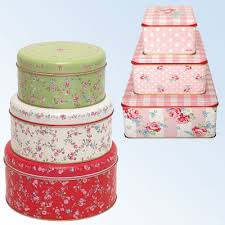 As we were chatting at a summer party last weekend, someone brought up the possible minimal pair archaic vs our cake. We were trying to think of a context in which there might be a plausible confusion between the two. Finally someone came up with a scenario involving two daughters visiting their elderly mother. They brought with them a cake as a gift, which their mother promptly stored in a tin. But she had numerous cake tins, all looking much the same, and tended to accumulate old cakes or pieces of cake and keep them in the tins for months. When it’s time for tea, one of the daughters looks at all the cake tins, picks one, and asks her mother “Is this one archaic/our cake?”
Non-native speakers may be surprised that this is even considered a minimal pair. Surely aʊə ˈkeɪk is rather different from ɑːˈkeɪɪk. Well, yes, if that’s what you say. But if you are one of the many NSs who pronounce our as ɑː(r) (rather than as aʊə(r)), then the difference is only a matter of the vocalic material between the two velar plosives, keɪk vs keɪɪk, which comes down to a subtle question of timing.
There are two reasons why our might be monophthongal ɑː(r). It might be through the operation of the optional process of smoothing, which deletes the second part of the diphthong aʊ when followed by another vowel [and, I should have added, compression, which makes two syllables one]. This is what gives us RP pɑː power, ˈɡɑː striːt Gower St, etc. (The quality of the resultant monophthong may or may not be identical to that of the ordinary ɑː of START words.)
But it might also be simply that ɑː is the default pronunciation of our. Not everyone has our as a homophone of hour. That is true for me, and for an unknown number of other NSs. The two words make a possible minimal pair, ɑː our vs ˈaʊə hour. And ɑː is not just a weak form: it’s the strong form too. (I ought to do a preference survey for this.)
When I was taught the Lord’s prayer as a child, it began ˈɑː ˈfɑːðə, hu ˈɑːt ɪn ˈhevn̩.
I might ask you “Did your bus come on time? We had to wait for ˈa(ʊ)əz for ˈɑːz.”
I don’t think there are many NNSs who pronounce our, ours as ɑː(r), ɑː(r)z. On the other hand there may well even be a majority of NSs who do. No one knows.
Kenyon & Knott included ɑr as a possibility for AmE as long ago as 1953 (possibly even in 1944 — I haven’t got the first edition to hand). For BrE priority goes, I think, to Jack Windsor Lewis, in whose Concise Pronouncing Dictionary (1972) ɑː is included just as a weak form.
When still edited by Daniel Jones, EPD did not recognize the ɑː variant. It was only when Gimson and Ramsaran took over that it was acknowledged as a possibility. Now the OED, too, has caught up. 
 It’s an old truism of acoustic phonetics that you can’t hear the hold stage of a voiceless plosive (as such).
What you get in the middle of a word such as happy ˈhæpi or lucky ˈlʌki is a short period of silence, as the airstream is for a moment prevented from moving through the vocal tract and out of the body. No air movement means no sound.
How, then, can we identify the place of articulation? How do we know that in the first word we have a bilabial p but in the second a velar k?
We know because of the formant transitions created as the organs of speech move into place for the complete closure (the ‘approach’ phase) and then again as they separate (the ‘release’ phase). You identify the p in happy through its effect on the end of the æ and on the beginning of the i. You identify the k in lucky by what you hear in the course of the ʌ and the i.
In the case of a fully voiced plosive, all you can hear during the hold phase is voicing. Again, you identify the place of articulation through the information contained in the formant transitions before and after, i.e. in the approach and the release. That’s how you know that abbey has a b, ladder a d, and lagging a g.
Let’s get back to the plosive clusters we were discussing on Friday apropos of Gdynia. In an English word such as acting ˈæktɪŋ we normally have the same ‘masking’ phenomenon we observed for the voiced plosives in hugged and Ogden.
In the English kt or gd the plosives typically overlap, in that we make the approach for the second plosive before releasing the first. The sequence of events is velar approach – velar hold – alveolar approach (inaudible, because the velar hold is maintained) – double hold (velar and alveolar) – velar release (inaudible, because the alveolar hold is maintained) – alveolar hold – alveolar release. The only audible phases are the velar approach and the alveolar release. In these the formant transitions supply the clues to the places of articulation.
To identify the place of a plosive it is sufficient to hear either the approach or the release. You do not need both. That is how we can tell that the word is ˈæktɪŋ rather than, say, ˈæptɪŋ or ˈætkɪŋ or ˈættɪŋ.
My impression from my first visit to Poland was, then, that for Polish gd- the two plosives did not overlap in the English way. Rather, the sequence of events was straightforwardly velar approach – velar hold – velar release – dental approach – dental hold – dental release. Rather than taking place during the velar hold, the dental approach was delayed until after the velar release. The tiny transitional nonsyllabic schwa between the plosives is created in the tiny interval of time between the two articulatory gestures, velar and dental.
We can leave the native speakers of Polish to debate whether this non-overlapping is usual, as I supposed, or only found in careful or overenunciated pronunciation, as some seem to claim. My impression is that if we compare English actor with Polish aktor it is typical for the English plosives to overlap but for the Polish ones not to. Similarly with the name Magda.
In strongly Japanese-accented English, on the other hand, a word such as actor tends to have a greater interval between the release of the k and the approach of the t. This space might be identified as a Japanese voiceless ɯ̥ (thus “ アクター”). Typically, it seems to be much longer than the momentary mini-voiceless-schwa of the Polish kt. It reflects the Japanese mora-based timing in which equal time is allotted to each of a, k(u), ta, a.
In response to the postings about the taunting tune  there has been no one from China, Japan or Korea who acknowledges it as a tune used by children in those countries in the way it is used in Europe. Bernstein claimed it was universal, found in all cultures; but perhaps he was wrong.
 From Japan, Masaki Taniguchi writes
I have been thinking about the teasing melody for a week. I have traced my memory of childhood. Now I clearly remember a teasing melody that my friends and I used to use in the early 1960's, which went |so so mi mi | so mi mi |. I also remember two versions of lyrics to go with this melody…
I have just contacted my childhood friend who used to live in the same town in Nagasaki Prefecture. He says that he vaguely remembers such a melody. He also says that today bullying is considered very inhumane and probably such a song has disappeared.
Nobody else that I have asked knows or remembers such a melody. I have asked a professor of music, and he recommended another who, he said, would be knowledgeable in such matters. I asked her, but she said she knew nothing of the sort, except for /ja:i ja:i/ (pitch: HL HL). This, I am sure, is known to all Japanese. It is certainly used for teasing.
I have also conducted a small survey. In a class with 12 students, I sang the melody you introduced in your blog, using the sounds used there, and told them that it was used among English children. I asked them what kind of impression they perceived and what kind of feeling they thought children would mean to express. Out of the 12, seven said it sounded "lively", four said, "teasing", and one said it sounded like a "lullaby". After that, I showed them your blog and we discussed it.
I think this negative evidence is important, because it tends to show that the claim of universality is false.
 Meanwhile, from England, Jill House confirms that the phenomenon is extensively discussed in Mark Liberman’s 1978 dissertation ‘The intonational system of English’ (Indiana University Linguistics Club). She also points out that the tune underlies not only ‘Bye baby bunting’ but also the song for the children’s game ‘Ring-a-ring-a-roses’. That’s true for the version I sang as a child, but — as Wikipedia reveals — there are or were other variants of the tune which differ.

Anyhow, thanks to all correspondents.
 I was in my teens when I first became aware of places in Poland called Gdynia and Gdańsk. I remember wondering how they could be pronounced without omitting the initial g. The nearest thing in English seemed to be the ɡəd- sequence in Lady Godiva ɡəˈdaɪvə and Godolphin (nowadays we have another example in Gaddafi), but I knew that wasn’t right. Yet as an initial cluster gd- seemed impossible to pronounce.
Then I realized that English does have the articulatory sequence gd, but in final position. We get it in the past tense of verbs ending in g, thus for example bagged bægd, hugged hʌgd. We get it medially, too, in Ogden ˈɒɡdən. All I needed to do was to transfer this gd to syllable-initial position.
That still seemed very difficult to do. The reason (I know now) is that in English we normally pronounce these plosive sequences as overlapping articulatory gestures. You can’t hear the release of the g in hugged, or for that matter in Ogden, because it is ‘masked’ by the concurrent hold phase of the d. What you hear is a velar approach, a long hold, and an alveolar release (if you’re lucky). And we don’t ever have this sort of thing at the beginning of a syllable.
It wasn’t until I first visited Poland, when I was twenty, that I discovered that in Polish the initial plosives in Gdańsk ɡdaj̃sk and Gdynia ˈɡdɨɲa are not like the English gd in hugged. Rather, when my Polish friends demonstrated the pronunciation to me, they released the velar plosive BEFORE completing the approach for the dental. This inevitably gave rise to a tiny transitional vocoid between the two hold phases, but it was not long enough to count as a separate schwa segment (compare the definite schwa in English Godiva).
If you can play .ogg sound files, Wikipedia has one of Gdynia here.
Despite my A level in Greek, somehow I’d failed to realize that classical Greek has an exactly parallel, but voiceless, cluster in words such as κτείς kteís ‘comb’ and κτίσις ktísis ‘foundation’. (What we did to pronounce those words in the Classical Sixth I can no longer remember.)
The stem of κτείς is κτεν- kten-, and from this is derived the modern zoological Latin name Ctenophora, the phylum of marine animals also known as ‘comb jellies’. In English we abandon any attempt at the initial plosive cluster, and pronounce them simply as tɪˈnɒfərə.
Modern Greek has dissimilated the plosive sequence, making the first element fricative. The modern word for ‘comb’ is χτένι ˈxteni.
So there are two attested escape routes: deletion or dissimilation.
But the Poles succumb to neither of these tempting articulatory simplifications, and persist with a sequence of plosives. Unmasked.
 Watching the goings-on in the House of Commons yesterday, I was reminded of another unusual British surname with a pronunciation over which you might hesitate if you came across it in writing. Andrew Selous is the MP for Southwest Bedfordshire, and when the Speaker called on him by name we heard it spoken: səˈluː.
Older readers will recall the Selous Scouts, the special forces of the Rhodesian Army. Nowadays there is a Selous Game Reserve in Tanzania. Both are named after Frederick Selous (1851-1917), a British explorer and big-game hunter.
The Oxford Names Companion suggests that this surname is English and ‘of uncertain origin, perhaps a habitation name from an unidentified place named with the OE elements s(e)alh willow + hūs house’. I would have thought that a name with that etymology would be more likely to be pronounced ˈseləs (cf. Backus from bǣc ‘bake’ + hūs , Malthus from mealt ‘malt’ + hūs ) — which it isn’t.
But maybe that etymology is not correct. Wikipedia states here that Selous is the Anglicized form of the Dutch name Slous. If that were the case, I would expect it to have been pronounced in Dutch as slɔus, which might give English slaʊs. Wrong again.
 Very much more plausibly, Wikipedia tells us in its article on the big game hunter that the name was originally French.
Frederick Courteney Selous was born on 31 December 1851 at Regents Park, London, as one of the five children of an aristocratic family, third generation of French-Huguenot heritage. His father, Frederick Lokes Slous (original spelling) (1802–1892), was notably Chairman of the London Stock Exchange.
As a French name, Slous would be expected to be pronounced slu. Equally, the spelling Selous implies səlu. And French schwa is a very variable entity: cela can be sla or səla. This origin would satisfactorily account for the English pronunciation səˈluː.
 How do you pronounce aged?




 Posts

