Friday, 4 January 2013

“bawl” and “ball”

In another part of the social media cybersphere Karen Chung, commenting on a picture of fractious children comforted by Santa with the caption bawl game over, asked

Are "bawl" and "ball" pronounced the same for everybody? Or differently?

I replied

I'm not aware of any variety of English in which they are distinct.

We know, of course, that many Americans do not distinguish the LOT and THOUGHT sets (although many other Americans do): but that’s not the issue. If there are people who consistently distinguish bawl from ball (and Karen insists that she is one such), then we have to recognize a split within the THOUGHT set, with an otherwise unreported choice of vowel in ball.

It turns out that for Karen ball rhymes with doll and Moll, as well as with tall, wall, fall, call, hall etc.; but not with words spelled with aul or awl, e.g. haul, maul, scrawl, trawl.

I was interested to hear this, but I continue to find it odd that there is no mention of this possibility in Kenyon’s American Pronunciation or as far as I can tell in any other descriptions of AmE phonetics. How come that no one seems to have mentioned it before?

Karen comments further

For me, the "a" in ball is the allophone of /ɑ/ which occurs before /l/ and is slightly rounded; the "au" and "aw" are the /ɔ/ phoneme, which has more inherent rounding. I expect I'm one of a minority, but it looks like others from my part of the US (Minnesota) and in my age group do have the distinction.

She also kindly supplied a sound file in support of her description.

Even if only a small number of people have this distinction, it certainly should be studied and mentioned in the literature.

We do have a comparable phenomenon in BrE, in the shape of the choice between ɔː and ɒ in words spelt als or alt — words such as false, salt, fault, halt, also. Since I knew about this at the time I wrote Accents of English, I created a special subsection (b) for THOUGHT, to cater for it (p. 146). If I’d known about Karen’s type of AmE, I’d have catered for that too: but I’d never then come across any mention of it.

There’s always something new to discover.

_ _ _

I shall be away now until the end of the month. Next blog: 4 Feb.

Thursday, 3 January 2013

conservators’ stress

How would you read this notice out loud? What intonation pattern(s) would you use? Where would you put intonation breaks? Which words would you accent? (The choice of actual tone is, as usual, less important and less constrained.)

Two breaks go, fairly obviously, at the points where the commas are written. There are optional intonation breaks at the ends of the first and second lines of writing. The nuclear accents in the resulting intonation phrases go on Conservators, responsibility, of, and from.

  • The Conˈservators | accept ˈno responsiˈbility | for ˈloss ˈof, | or ˈfrom, | …

But I think we need a further break after to, with a nuclear accent on that word.

  • The Conˈservators | accept ˈno responsiˈbility | for ˈloss ˈof, | or ˈfrom, | or ˈdamage ˈto | ˈvehicles ˈparked in this ˈcar park.

I find it difficult to explain, in terms intelligible to EFL students, just why this must be so. Perhaps my command of syntactic analysis, or logic, or pragmatics, is insufficient. OK, the items of and from are in contrast (“loss of vehicles”, “loss from vehicles”), so they receive contrastive focus. Then these categories of loss are in contrast with a further category. damage, so we need an accent there, too. But why do we need to put contrastive focus on to? Despite appearances, to is not in logical contrast with of, from, or with anything else.

But I think it would sound bizarre to read the notice aloud without a contrastive accent on to.

There must be a generalization here to be made about the accenting of prepositions in elliptical coordinated structures. Yet I am not sure what it is.

Sometimes we have a choice of accentuation patterns.

  • Any interˈference with, | or ˈdamage to, | this instalˈlation | will be subject to a fine not exceeding £500.
  • Any interˈference ˈwith, | or ˈdamage ˈto, | this instalˈlation | will be subject to a fine not exceeding £500.

_ _ _

As for the word stress in conservator, there are two possibilities in contemporary BrE, ˈkɒnsəveɪtə and kənˈsɜːvətə. The OED says (entry updated 2010)

In some 18th and 19th cent. sources (see e.g. Johnson 1755, Sheridan 1780, Smart 1849) the word is recorded with stress on the third syllable. From 1947 onwards editions of D. Jones Eng. Pronouncing Dict. distinguish between use of the word in the sense ‘official guardian’ … with stress on the second syllable and use in the sense ‘preserver’ … with stress on the first syllable.

The officials looking after Wimbledon Common are known locally as the kənˈsɜːvətəz. However I’m not sure that many people would observe Jones’s distinction consistently, so in LPD I just give both alternatives.

Wednesday, 2 January 2013

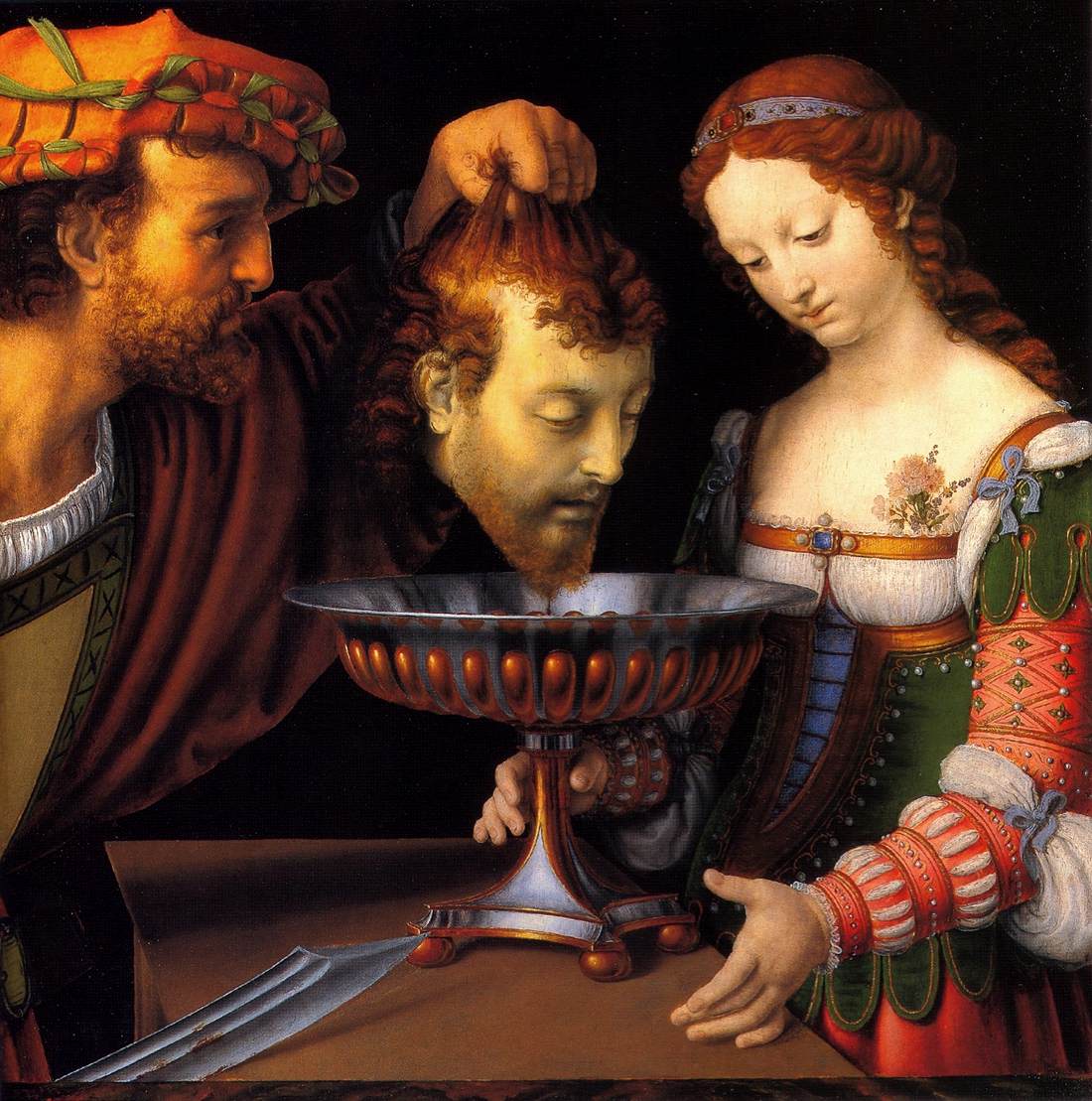
Salome

…which (that is to say, the Latin stress rule) brings us to the name Salome, borne inter alia by John the Baptist’s nemesis in gory Christian iconography. Its traditional pronunciation in English is səˈləʊmi, stressed on the penultimate and thus reflecting the long penultimate vowel and corresponding stress pattern of Latin Salōmē, from Greek Σαλώμη (where the letter omega, ω, tells you that the vowel is long).

In contemporary English, though, this is now in competition with initial-stressed ˈsæləmeɪ (which the Cambridge EPD, by the way, treats as the only American possibility, I’m not sure with what justification). The strong final vowel here may be inspired by the French version of the name, Salomé salɔme, or even the Spanish version (though in Spanish it has final stress). The initial stress can only come from applying the Latin stress rule on the mistaken assumption that the o was short.

Yesterday Jeremy Paxman had to ask a question to which the answer was Linnaeus: who wrote the Systema Naturae? But he pronounced the second word as ˈnætjʊreɪ. In Latin, of course, the u in this word is long: so the stress should be on the penultimate. Which is where we came in.

Tuesday, 1 January 2013

on the edge

And a happy new year to all of you too!

It’s many months now since we last discussed the Latin stress rule and its consequences in English. Chomsky and Halle, in their seminal The Sound Pattern of English (1968) claimed that this rule is part of English phonology, i.e. part of what native speakers know about English. Nothing demonstrates the falsity of this claim so much as the persistent failure of educated native speakers to observe it in their pronunciation of Latin names and other words.

The rule is: a Latin word in which the penultimate vowel is short and not followed by a consonant cluster has its stress on the antepenultimate. (For a longer explanation, see my blog for 27 Oct 2010.) Native speakers are supposed to be able to have inferred this from such examples as deficit, stimulus, nebula, monitor, omnibus, which meet the structural formula and are stressed on the antepenultimate (here =first) syllable, as against such examples as aroma, gladiolus, dictator, hiatus (with a long penultimate vowel) and agenda, propaganda, protector, hibiscus, professor, bacillus, colossus (with a consonant cluster after the penultimate vowel; note that in English it is consonant letters that count, not consonant sounds) — which do not meet the structural formula and accordingly take penultimate stress. (The account in SPE is actually considerably more complicated. In English, nouns are subject, it is claimed, to a further rule that says we ignore the final syllable if weak and apply the Latin rule to the remaining stem; longer words of all word classes are then likely to be subject to other rules that shift the main stress elsewhere. We’ll ignore all that.)

No one ever explicitly taught me this rule when I studied Latin as a schoolboy, but I certainly absorbed it unconsciously, since I left school knowing where to stress any given Latin word appropriately (if I knew the quantity of the penultimate vowel). So to this extent Chomsky and Halle’s claim is perhaps justified.

Not so for Jeremy Paxman, as was evident from his hosting of Christmas University Challenge on BBC2 TV yesterday evening. Although he has a degree in English from Oxford, he doesn’t know where to stress Latin words. He asked the teams a question about the meaning of the Latin mottos engraved on the rims of our £1 coins.

  • DECUS ET TUTAMEN
  • NEMO ME IMPUNE LACESSIT

We’ll forgive ˈtuːtəmen for what should be tuːˈtɑːmen , since the quantity of the middle vowel is not indicated in the spelling (though gravamen and stamen might have given him a hint). But the double ss in the spelling of lacessit indicates beyond doubt that it must be stressed ləˈkesɪt, not (as he had it) ˈlækesɪt.

What a good thing he didn’t have to attempt to pronounce the third of the £1 coin edge inscriptions — it’s in Welsh, about which I’m sure he knows even less than he does about Latin.

  • PLEIDIOL WYF I’M GWLAD

(That’s ˈpləjdjol ujv im ɡwlaːd, or anglicized ˈplaɪdiɒl ˈuːɪv ɪm ˈɡlɑːd.)

Monday, 31 December 2012

epergne

On the BBC2 TV antiques show Flog It! a member of the public had brought in a silver-plated object she owned and that she was hoping to auction. She wasn’t sure what it was; but the expert was at hand to tell her. “It’s a — a French word, it’s an eɪˈpeən — a French word for a table-centre display.”

Fair enough, except that the name of the object in question, epergne, is not a French word at all. Despite its spelling, which looks more or less French (though if it were really French it would probably have an acute accent on the first vowel, so épergne), and despite the more or less French pronunciation that the expert used (as if in French it were epɛʁɲ(ə) — despite this, there is no such word in French. The nearest French word that does exist is épargne epaʁɲ(ə); but that means ‘savings’, and has nothing whatsoever to do with table decorations.

So it’s all a bit of a mystery really. Here’s the OED:

In LPD I followed EPD in giving the mainpron as ɪˈpɜːn, with varprons e-, -ˈpeən. I did add a note, “not actually a French word”, and for that reason gave no French pronunciation. Perhaps I ought to have done, though, so as to cater for those, like the TV antiques expert, who pronounce it as if it were.

Friday, 21 December 2012

nonrhotic respellings

Talking of confusing non-rhotic respellings (yesterday’s blog and comments), yesterday’s Independent newspaper had an interesting take on the correct pronunciation of German.

In German, Miele is pronounced ˈmiːlə, ending with a closish schwa. (German has a contrast between this close-mid schwa and the open-mid schwa ɐ, as in the minimal pair bitte ˈbɪtə ‘please’ vs. bitter ˈbɪtɐ ‘bitter’.)

Unfortunately, the English spelling ar, while indeed standing for schwa in nonrhotic beggar, particular, collar, standard etc, also stands for ɑː in cigar, pulsar etc. And of course rhotic readers will interpret it as implying a following r sound too.

Today’s Guardian, on the other hand, has an interesting mistake which presumably results from a nonrhotic reporter’s mishearing of what was said in court or at a press conference.

The term hermetic means (COD) ‘1. with an airtight closure. 2. protected from outside agencies. 3 of alchemy or other occult sciences, esoteric’. The word intended must have been anti-emetic.

_ _ _

Happy Christmas everyone. Next posting: 31 December.

Thursday, 20 December 2012

he nar get none

It’s some time since I last discussed Montserratian Creole English (see 21 Nov 2006 here) in this blog.

But yesterday a news report on the web caught my eye. Under the headline Premier Meade Says Montserrat Is Blessed and 'He Nar Get None' we read

During the statement, whilst talking about sand mining, the Premier sought to take a dig at Montserrat born calypsonian De Bear, for his 2012 hit song entitled 'All Ah Dem Ah Get' by stating that contrary to insinuations in the very popular song, Meade stated, "me nar get none."

The point of interest here is the spelling nar for the Creole word pronounced naː. This is a function/structure/grammar word/particle used in certain Caribbean creoles (certainly Jamaican and Montserratian, at any rate) but not in standard English. Its meaning is a combination of negation and progressive aspect, ‘not …-ing’. The calypsonian’s claim aːl a dem a ɡet could be paraphrased in standard English as ‘they are all getting’, i.e. ‘they’re all on the take’, and the premier’s riposte as ‘I’m not getting any’. Here’s the relevant entry in the Dictionary of Jamaican English.

Notice that the DJE spells it naa, in accordance with the phonemic spelling system devised by Fred Cassidy for Jamaican Creole and now recommended by the Jamaican Language Unit at the University of the West Indies as a ‘standard writing system for Jamaica’. You also sometimes see the spelling nah. (In JC, but not MC, the progressive aspect is also used to refer to habitual action: nah gwan a Jamaica ‘don’t go on in Jamaica’.) But Jamaicans never spell it nar (the spelling used in yesterday’s report from Montserrat), and for a very good reason: in JC this particle does not rhyme with car, far, tar etc, which in JC retain their historical r in pronunciation (kjaːr, faːr, taːr).

Montserratian Creole, however, is non-rhotic. There naː rhymes exactly with faː and so on, making it common sense to spell it in the same way, with an r.

If you’d like to hear what Montserratian standard English sounds like, try this. For Montserratian (semi-)Creole the best I can offer you is this clip of De Bear, who was born and grew up in Montserrat; but he doesn’t happen to say naː at any point in this calypso.