 The Guardian recently had an interesting leader entitled “Unthinkable? Simpler spelling”, to which Greg Brooks subsequently offered a rejoinder “These variations on English spelling simply won’t work”.
The Guardian’s editorial has been rightly pilloried for repeating the absurd claim that
phonetic languages like Italian and, apparently, Finnish not only have no problem with dyslexia, they don't even have a word for it.Of course the Finns do have a word for it. Dyslexia may be less of a problem in languages with regular spelling, but that doesn’t mean it doesn’t exist, still less that their speakers can’t name or discuss it.
Nevertheless, I was pleased to see the Guardian arguing that the time has come
to step back where we can from uniformity and let in variety and simplicity [in our spelling].Greg Brooks welcomes this openness and gives some examples.
Some oddities in conventional spelling occur in only a few words, and could be changed without causing problems: bild, cubbard, dubble, gost, gard, lam, bom, crum, autum, potatos, sope, foke, buty, canoo, frute. These would be easier for native and non-native speakers, but would have to become official – not alternatives to existing spellings [emphasis added — JCW].
On the assumption that we are content to allow reform of these “oddities”, I don’t see the logic in insisting that the traditional spellings must no longer be permitted alongside the reformed spellings. Why not allow the two forms to co-exist, to compete if you will, until one or other becomes obsolescent and ultimately obsolete?
That is what has often happened in the history of our spelling.
Even within my own lifetime I can think of examples. As a boy I was taught that we could spell the word pronounced ʃəʊ either as show or as shew.
Now the LORD had said unto Abram, Get thee out of thy country, and from thy kindred, and from thy father's house, unto a land that I will shew thee. Gen 12:1No one would write shew today.
That reminds me. When I was at school it was still quite usual to write no-one and to-day with a hyphen. That hyphen is now obsolescent in the first, obsolete in the second. Nowadays (now-a-days), you will see mostly no one and only today. A hundred years ago our newspapers wrote Oxford-street; today it’s Oxford Street. All those hyphens first coexisted with the unhyphenated forms, then finally lost out.
When I was a boy the spelling gaol (for jail) was the usual spelling in Britain. Only Americans would write jail, we thought. Wrong: British newspapers too now write jail.
In Britain we tolerate both organise and organize, and similarly with many other -ise/-ize words. (Some British people wrongly imagine that only -ise is correct for us. On the contrary, the Concise Oxford Dictionary, like many others, prefers -ize.) It does no harm to allow both forms. The same applies to judg(e)ment and various other cases.
And so we come to build and cupboard. On the first, the OED comments (with its charming Victorian syntax)
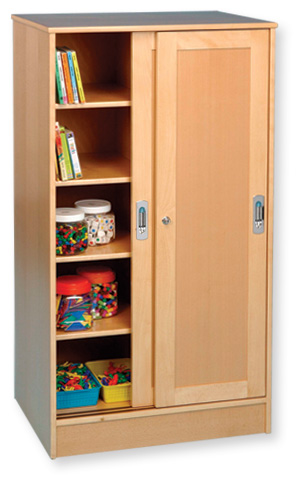
The normal modern spelling of the word would be bild (as it is actually pronounced); the origin of the spelling bui- (buy- in Caxton), and its retention to modern times, are difficult of explanation.On the second, we all know that despite its etymology a modern cupboard is not a table or board for cups. It is a cabinet or closet in which we store all sorts of things. A “broom cupboard” has nothing to do with cups or with boards.
So if people want to write about bilding a cubbard, let’s allow them to do so. As for those who prefer building a cupboard — let them continue to do so. Let a hundred or so improved spellings like these exist alongside the traditional forms. Let a hundred flowers bloom. And let’s see what survives.





 Posts

