skip to main |
skip to sidebar
The travel booking website Expedia is running a series of ads in the British newspapers (and possibly elsewhere — I don’t know). The aim is to encourage us to book hotels enabling us to explore different parts of Britain and Ireland.
They feature respellings such as might be appropriate for the accents/dialects of various different geographical regions.  This one obviously wants to target people visiting London. It features
• rhyming slang, a well-known feature of traditional Cockney. I’ve never heard these versions of hurry and money, but they’re perfectly plausible.
• h-dropping, found throughout working-class England, but stereotypically associated particularly with Cockney.
• more respelt as maw, which implies no change in pronunciation for Londoners, since both are mɔː ~ mɔə.
All these features are also found elsewhere, but happily evoke London.
But what about this? 
In case we’re puzzled, there’s a giveaway: they’re talking about Dublin. But in one detail it seems to me to be somewhat inept.
• the respellings cast and tap, for cost and top, reflect the fact that unrounded vowels in the CLOTH-LOT set are typically to be found in Ireland (or of course the US and Canada), not in England. Fine.
• nex for next, represents cluster reduction kst→ks before a following consonant in connected speech. This is found in virtually all kinds of English, including RP.
• nuttin for nothing reflects (i) the use of an alveolar n rather than a velar ŋ in the -ing ending, and (ii) TH stopping (θ→t). The first is found as a “low” variant throughout the English-speaking world (except, apparently, among white South Africans), while the second is indeed a characteristic of Irish English (though also of Caribbean English, NYC etc).
• noight for night. This appropriately suggests a lower-class Dublin ɒɪ PRICE vowel, though it could apply equally to London or Birmingham.
• oyt for out. Who uses ɔɪ or similar in MOUTH words? Not Dubliners, not anyone much in the Irish Republic (sorry, the Republic of Ireland). Rather, qualities such as ɑy, ɒɨ are associated with the distinctive accent of Northern Ireland, particularly perhaps with Belfast. Not Dublin. Or am I wrong?
 Something of a cri de coeur today from Simon Gilman, who is about to take up a new post in Voice at a university drama department in the north of England. Forgive me if I quote part of his email at some length.
Phonetics, as taught by Roach et al, still employs symbols for English RP that are at some variance with the sounds used contemporarily when set against the standard IPA vowel chart. It makes no sense to me that, for example, ʌ is used for the STRUT vowel when on the IPA chart the cardinal usage of this symbol is far further back and nearer in pronunciation to American (perhaps South-Western?). I think you previously agreed with me that the vowel that the contemporary RP user employs is far more like ɐ. Why then does Roach place ʌ in his chart more or less where one would find ɐ on the standard chart? I can’t use phonetics with my acting students and explain that ɔ is a rounded open-mid back vowel and show them on the standard IPA chart where the cardinal exists, and then explain that its unrounded equivalent is actually articulated as a near-open central vowel. The problem exists because I want to use contemporary RP as a fundamental phonetic benchmark from which to use phonetics to transcribe other accents, but I can’t fight against existing texts and teaching standards in isolation.
You’re right, Simon. Practical necessity indeed means we all have to use existing textbooks and pronunciation dictionaries. We ought not to deviate from their transcription systems without very good reason.
If you “want to use contemporary RP as a fundamental phonetic benchmark from which to use phonetics to transcribe other accents”, then don’t start by teaching students the symbols for cardinal vowels. Teach them the vowel symbols for RP.
If and when you move on to teaching the cardinal vowels, please bear in mind that they constitute an abstract reference framework and not the vowel system of any particular language or accent. They were intended to reflect the most extreme positions of which the human vocal apparatus is capable. In applying them to real-life situations we always have to compromise, since no known language is spoken exclusively with the cardinal vowels or a subset among them.
Symbols mean what we choose to make them mean. If you want your students to make use of existing textbooks and pronunciation dictionaries, you have got to teach them that the STRUT vowel in standard accents is transcribed with the symbol ʌ. Later, if you want to study the differences between Jonesian RP, contemporary son-of-RP, various kinds of AmE, and assorted north-of-England English STRUT-FOOT fudges, you can decorate ʌ with interesting diacritics, or indeed choose another symbol or symbols instead. But in doing so you will be exploring a great multidimensional vowel space, in which the cardinal vowel system can do no more than help us feel our way.
When I first studied phonetics, under John Trim at Cambridge, we were set transcription exercises, i.e. asked to convert English orthographic texts into phonetic symbols. We had been armed with a list of symbols and keywords. But as well as doing the task in the way he was expecting, I also amused myself (or was showing off) by transcribing it in accordance with various other transcription systems I had come across or invented myself. So I wrote love as lʌv as taught, but also in another version as lə́v, because I had read Gleason’s Introduction to Descriptive Linguistics, and in yet another as lɐv, following the same logic as Simon. I did the same sort of thing for various other vowels. This game is fun for beginners fascinated by phonetic symbols, as I was, but impractical for drama students who just want help with accents and dialects. (For more of my early experimentation, see my blog for 16 March 2007.)
When I grew up, I settled down to writing RP STRUT as ʌ, just like everyone else. The brief answer to Simon’s first and main problem, then, is that if he wants his students to be able to consult existing textbooks and pronunciation dictionaries he should teach them that ʌ stands for the vowel in RP/GenAm strut, love, double, rug etc. (At a rough guess I imagine that would account for over 99% of the use of this phonetic symbol in published materials, with the cardinal ‘open-mid back unrounded’ value accounting for the remaining 1%.) Anyhow, you can see how I coped with your general problem by looking at what I did in my Accents of English (CUP 1982).
Sooner or later I imagine there will be a tectonic shift in the notation of English vowels. As not only STRUT but also GOOSE, THOUGHT-NORTH-FORCE and various other vowels move further away from the cardinal qualities associated with the symbols we currently use, some author will bite the bullet and provide us with an entirely new transcription system. Geoff Lindsey (blog, 12 March 2012) has already had a go.
Until that happens, stick with what we’ve got.
More reports from BAAP:
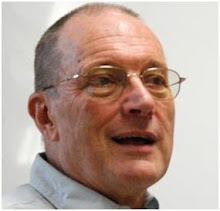
 • Calbert Graham (pictured) and Brechtje Post found that even at a low level of proficiency Japanese learners can generally assign English word stress appropriately. They can also perform “the durational and pitch feature contrasts of English stress” in much the same way as native speakers. However “results for intensity suggest a non-use of this feature in realising stress, even by advanced learners”. I don’t know whether this has any practical implications for teachers of EFL to the Japanese. I suspect that we NSs hear the stress contrasts produced by Japanese learners perfectly well, despite the missing variability in loudness.
• Arabic ḍād ض is nowadays typically realized as a pharyngealized voiced dental plosive dˤ or fricative ðˤ. In medieval treatises, however, it was described as a lateral, and may perhaps have been an ejective affricate t͜ɬ̕ˤ or voiced fricative ɮˤ. Lateral articulation of ḍād had been thought to be obsolete in modern Arabic, until in the early twentieth century scholars began to report its existence in parts of southern Arabia. Barry Heselwood and colleagues presented electropalatographic evidence from southwest Arabian dialects attesting to both lˤ and ðˡˤ realizations, the latter being a central fricative accompanied by unilateral escape.
• Kathleen McCarthy and UCL colleagues have been looking at the perception and production of English stops and vowels by London Bengali children. They call these children ‘sequential bilinguals’, since they typically start with Sylheti at home before starting to use English at about 3½ years. The phoneticians tested the children’s ability to perceive contrasts such as pea-bee, coat-goat, sheep-ship, cart-cut. At age 4 they performed significantly worse in these tests than monolingual-English controls. Their production is also “Sylheti-accented”. Surprise, surprise! We await results of the forthcoming retests to be carried out when the children are older and, presumably, more English-oriented.
 • Examining the recordings in the Sound Atlas of Irish English, Elke Philburn found that glottalization of t, and to some extent of p and k, is not as geographically limited in Ireland as usually assumed, and appears to be spreading. It is well known to occur in Dublin, Belfast, and the Ulster Scots areas, but she found it ‘to some extent’ in all 32 counties. Teenagers (83%) glottalize much more than the elderly (7%).
 • People acting as subjects for ultrasound tongue imaging or electromagnetic articulography tend to wiggle their tongues around when awaiting their turn to utter. How can you inhibit this ‘non-linguistic pre-speech behaviour’ or ‘vegetative wiggling’ and achieve ‘reliably still tongues’ in the run-up to speech? According to Sonja Schaeffler and Jim Scobbie, by playing them an audio prompt or making them listen to a dialogue partner. Distract them that way, and they’ll keep their tongues still.
Three presentations at the BAAP meeting concerned current developments relating to r in Scottish English.

• Gerald Docherty et al reported that findings emerging from a project on Accent and Identity on the Scottish/English border show that it is an oversimplification to say, as we usually do, that the English side of the border is non-rhotic while the Scottish side is rhotic. This project involved research into speakers from Gretna (purple marker on the map) and Eyemouth (blue) on the Scottish side and Carlisle (green) and Berwick (red) on the English side. Younger working-class speakers on the Scottish side, more in the west than in the east, are starting to lose their rhoticity. This confirms what has been reported elsewhere for Glasgow English.
• Arising from the same project, Dom Watt et al showed that, compared with Eyemouth, Gretna is further along the historical path whereby the ɪr, ɛr, ʌr of bird, berth, hurt merge into a single ɝ ~ ɜ. “The loss of rhoticity appears to act as a trigger for the NURSE merger. It is not a necessary precondition, however, as the merger may precede derhotacisation.” The change is also probably triggered by a change from tap ɾ to approximant ɹ as the preferred realization of postvocalic /r/.
• Eleanor Lawson et al used audio-ultrasound tongue imaging to show that two distinct ways of articulating the approximant have different effects on the preceding vowel. In central eastern Scotland, they found, working-class speakers tend to use a tongue-tip variety, which leads to retraction of the vowel, whereas middle-class speakers go for the “bunched” tongue configuration, leading to vowel centralization and completion of the NURSE merger.
 Another paper relating to Scotland concerned not English but Gaelic. It was a surprise to me to hear that over half the speakers of Gaelic are to be found not in the outer Hebrides but in the Glasgow conurbation. Claire Nance carried out research at a Gaelic-medium school there, the Glasgow Gaelic School/Sgoil Ghàidhlig Ghlaschu.
Gaelic uː has two allophones: it is thoroughly back before lˠ nˠ rˠ but central ʉː in all other environments. Looking just at the Glasgow children’s pronunciation of the central allophone, Claire found it to be undergoing further fronting, just like the corresponding Glasgow English GOOSE vowel. Taking two groups of students divided by their degree of engagement with Gaelic and with schooling generally, she found that the studious, obedient ones keep their Gaelic vowels more distinct from their English vowels than do the ‘less school-oriented’ ones with attitude. But they all sound Glaswegian to other Gaelic speakers.
Watch and listen to her yourself here.
_ _ _
Bank holidays coming up. Next posting: 10 April.
No sooner had I got back from Kyiv than I was off to Leeds for the biennial Colloquium of the British Association of Academic Phoneticians (BAAP).
The presentations there were of very high quality. Everyone started on time and finished on time (thanks to tight chairing), everyone was audible, all the Powerpoint slides were readable, and as far as I could tell no one just read out a prepared text. The posters were good, too. And that’s more than you can say of some academic conferences I have attended.
 At each BAAP colloquium members vote to award three prizes. One, the Peter Ladefoged prize, goes to the paper or poster that best reflects Peter’s approach to phonetics. This time it went to Adrian Simpson (pictured) for a paper on Percussives. (“The percussive manner [of articulation] involves the striking together of two rigid or semi-rigid articulators.” — IPA Handbook, p, 187) As well as the [ʬ ʭ ¡] of ExtIPA, he discussed, with wave-form support, the labial percussive that arises from the approach phase of the [p] in the [ʔp͡ t] of words such as stamped, along with the transient ‘epiphenomenal clicks’ that arise as a consequence of other articulations. Adrian is the kind of phonetician that I approve of: he personally demonstrated to us each of the sound-types he referred to. (I don’t care for phoneticians who can’t or won’t perform in public. If we want our students to make this or that sound, we’ve got to be able to do it ourselves.)
The two Eugénie Henderson prizes go to the best oral presentation and the best poster by newcomers. The first was awarded to Michael Ramsammy for an electropalatographic investigation of the weakening of Spanish l in preconsonantal environments. The second was won by Nicholas Flynn for a poster comparing twenty vowel formant normalization methods. He concluded that “vowel-extrinsic, formant-intrinsic” methods performed the best at normalizing vowel formant data for sociophonetic study. (No, I don’t understand this, either.)
Here are some new technical terms I noted among the ninety or so papers and posters at BAAP:
• attriter, a bilingual whose L1 has become subject to attrition through living in an L2 environment;
• enchronic, relating to the time at which an utterance is uttered;
• LADO, Language Analysis for the Determination of Origin (of an asylum seeker)
I have no idea what is meant by ‘7th- and 8th-order sliding-Gaussian-window lpc analysis’ (John Esling), nor by a ‘Bootstrap Markov Chain Monte Carlo algorithm’ (John Coleman). But perhaps they had their respective tongues in their cheeks when uttering these words. (If you feel strong, look here, here, and here.)
And what, you ask, about the public use of English in Ukraine? Is there English-language public signage to be seen on the streets of Kyiv?
Not much, compared with some other eastern European countries. And what there is tends to be masked by being written in Cyrillic.
Here’s part of a photo I took from a window in the Linguistic University. It’s a dealership for Jaguar cars. As you can see, the Jaguar logo, with the word in English, appears on the right; to the left, the Cyrillic writing says ЯГУАР СЕРВІС, i.e. ‘Jaguar service’. (I don’t know whether they would pronounce ягуар with ɦ or with ɡ.)  The word сервіс ‘service’ presumably qualifies as a loanword rather than a word in a foreign language (English). The same is true for my hotel’s trilingual notice about ‘room service’. (The English version is not actually correct, since we don’t write ‘room service’ with a hyphen.)
And ‘smartphone’ has certainly been adopted as a loanword. Here it is with a Ukrainian plural ending (and a discount).  Here is the ‘price list’ (прайс лист, prajs ɫɪst) offered by a Міні Хауз кафе (cf blog, 2 June 2011).
My familiarity with the Cyrillic alphabet is sufficient that if I see a sign saying РЕСТОРАН I read it to myself as restoran. But people who don’t know Cyrillic see something quite different. They see Latin letters, and read it to themselves as ˈpektəʊpɑː. Or so they tell me. What a funny word for a restaurant!
In Kyiv I saw a small political demonstration on the streets. I’m not sure what it was about, but the protesters were carrying signs reading (I thought, unthinkingly) Hi!.
Who were they greeting so warmly? Who were they saying hello to? It was only after doing a double take that I realized that the signs actually said НІ!, which is pronounced nʲi and is the Ukrainian for “no!”. No, no, no!
Unfortunately I didn’t take a photograph of this, but on the internet I found one that will perhaps do instead. If you look very carefully you will see a tiny dot on the I, which is a hint that the letter is not Latin I but Cyrillic І. 
In Ukraine I also noticed several advertisements for Baxi fires. Baxi is a British manufacturer, based in Preston, and (I quote) “one of Europe’s biggest manufacturers and distributors of domestic and commercial water and space heating systems”. The name is based on the surname of the founder, one Richard Baxendale. In English, of course, we pronounce it ˈbæksi. I can’t help wondering whether Ukrainians would read it as ˈvaxʲi, since in Cyrillic B stands for the labiodental v and X for the voiceless velar fricative. Or do they recognize it as English and say ˈbeksi?  There’s more here.
 It was fifteen years since the previous time I had visited Kyiv (i.e. Kiev, as we used to call it), so when I was there recently people kept asking me what differences I could see around me on this, my second visit.
Physically, visually, there were obvious changes. There were quite a few new buildings — new sports stadia, new bridges across the river, new hotels, new office blocks, new (rather ugly, I thought) high-rise residential blocks. And motor traffic on the streets was much heavier, with traffic jams everywhere.
But what about the linguistic situation? That has clearly changed, too. I was struck by the fact that nearly all street names, shop signs and advertisements now seem to be in Ukrainian rather than in Russian. That’s different from the situation fifteen years ago. Only in my hotel did I see Russian signs to the exclusion of Ukrainian, but of course the hotel is mainly for visitors from elsewhere, not for locals. Likewise in the university I think I heard less Russian spoken, more Ukrainian; though there are still plenty of academics who are clearly more at home in Russian.
My hosts kindly took me to a music recital in celebration of the composer Lysenko and to a performance of a Kalman operetta Сільва (the English title of which, I have since discovered, is the Gypsy Princess). Both were entirely in Ukrainian.
How do I know this? Although I speak neither Russian nor Ukrainian, I can recognize the difference between them in writing and, less confidently, in speech. In writing, the letters ы and э are used in Russian but not Ukrainian, while є, і and ї are used in Ukrainian but not in Russian. In place of the Russian hard sign, ъ, Ukrainian uses an apostrophe.
To an outsider’s ear the two languages sound pretty similar. One difference is that Ukrainian has less vowel reduction than Russian: you get unstressed o, which in Russian would be reduced to a ~ ɐ or ə. Another is the distinctively Ukrainian consonant ɦ, which is of high frequency in running speech. ‘Programme’ is програма pɾoˈɦɾama. Canonically this is a voiced glottal fricative, though in practice it sometimes seemed to me to be devoiced.
There are a whole lot of words in which Ukrainian has the vowel і corresponding to Russian о, as in the prefix під- pid ‘under-, sub-’, which is Russian под- pod. Although the two languages share much of their vocabulary (give or take a sound change or two), there are also numerous obvious differences. ‘Language’ is язык jaˈzɨk in Russian but мову ˈmovu in Ukrainian. Where Russians thank you by saying спасибо spɐˈsʲibə, Ukrainians say дякую ˈdʲakuju.
The relationship between spelling and sound is confusingly different in the two languages. In Russian, the letters и and е imply palatalization of the preceding consonant, while in Ukrainian (if I’ve got it right) they do not. The corresponding Ukrainian palatalizing vowel letters are і and є, which are not used in Russian. The twin-dotted Ukrainian ї stands for ji. And words can begin in Ukrainian with the letter й, which is not possible in Russian.
In the picture you see the name-badge I was given. My surname is transliterated as Уелз, which would be read in Ukrainian as ueɫz. Given that the language has no initial w, that’s fine. But if read in Russian it would come out as ujeɫs, which is not so good. In Russian transliteration my name is Уэлз.
 This one obviously wants to target people visiting London. It features




 Posts
Posts

