skip to main |
skip to sidebar
 One or two people have written to me to suggest that I discuss the English pronunciation of tsunami. I have not done so, because the matter has already been extensively aired on Language Log, including here.
OK, then: let’s agree that if we articulate very carefully we can reproduce in English the Japanese affricate ts (which is the allophone of /t/ used before u), giving tsuˈnɑːmi. But once we have got into our stride we’re likely to simplify the initial affricate to a plain fricative, suˈnɑːmi.
(Fun fact: in the local speech of Kōchi 高知, on the island of Shikoku, this allophone is not used, and people say tunami.)
The same sort of thing happens in other borrowed words that have initial ts in the donor language. So tsetse (fly), from Tswana, becomes English ˈ(t)setsi. However with tsar (from Russian царь tsarʲ) and Zeitgeist (German pronunciation ˈtsaitgaist) the English outcome tends to be a voiced fricative, thus ˈzɑː, ˈzaɪtɡaɪst. In the latter word this is easily explained as a spelling pronunciation giving the letter Z its usual English value, and I suppose tsar may be similarly influenced by the alternative and older spelling czar, which the OED dates from 1549.
This voicing uncertainty made me think about other cases where we have borrowed from a foreign language words beginning with a consonant plus s. Notably, these are the Greek-derived words spelt in English with ps- and x-.
It is clear that words with Greek initial psi (Ψ, ψ, ps) end up in English with a voiceless s, while those with initial xi (Ξ, ξ, ks) end up with z. So on the one hand we have psalm, pseudonym, psoriasis, psychology etc with s-, but Xerxes, xenon, xenophobia, xylophone with z-.
So the bilabial produces a voiceless outcome, the velar produces a voiced outcome, and the alveolar can go either way. I do not know why.
An early start this morning and no time for a proper blog entry, so here’s a link to a jolly song to help you learn the Arabic alphabet (or “abjad”).
 Over-60s in London are entitled to a Freedom Pass, which gives free travel on all buses, underground, overground and trams, and on the Docklands Light Railway. It also gives free travel on National Rail services within London, but only after the morning rush hour is over. A “twirly” is supposedly an older person who tries to use their free travel pass on rail services before 09:30.
“Twirly” is a contraction of “too early”, because bearers of Freedom Passes are supposed to crowd around the ticket barrier just before half past nine, waiting to enter and asking “Am I too early?”
I have seen and heard several mentions of this term recently, though I don’t think I have ever heard it in use (as opposed to mention).
In any case there is something of a phonetic problem with it. The general rule in English phonetics is that WEAK u (ʊ) can be compressed to w before a following vowel, but that strong uː cannot. Furthermore, even weak u can undergo this compression only if the following vowel is itself weak. So (in my kind of English) there is nothing awkward about twəˈraɪv to arrive if suitably embedded in a sentence, or twɪkˈspləʊd to explode. However it would feel wrong to say twiːt instead of tuˈiːt to eat or twɑːsk instead of tu ˈɑːsk to ask, because in those cases the vowel following the compression site is strong. It would also feel wrong to say twɪɡˈzɔːstɪŋ instead of tuː ɪɡˈzɔːstɪŋ too exhausting, because too — unlike to — has no weak form and is therefore not a candidate for compression. It follows that ˈtwɜːli fails on two counts: (i) because the initial ɜː of early is a strong vowel, and (ii) because it involves too not to.
I would claim that nobody compresses too or two, because nobody has a weak form for them. And for people who shun the tu prevocalic weak form of to in favour of generalizing tə to all unstressed positions there will be no compression of to either.
[There is a complicating factor here. In some kinds of RP strong tense uː can undergo smoothing to a laxer ʊ even when stressed, as in ˈtuː əˈklɒk → ˈtʊ əˈklɒk two o’clock. But this does not entrain the possibility of compression. Compare two o’clock (no compression, always three syllables) with to a clock (can be compressed, potentially two syllables).]
The on-line Urban Dictionary, always entertaining, offers several definitions for twirly: not only the one we are discussing here but also a number of others, including indelicate ones supported (if that is the right word) by implausible fragments of dialogue illustrating their supposed use.
I hope this posting wasn’t twʌnɪkˈsaɪtɪŋ. (Actually, it can’t have been. Now you know why.)
 Last Thursday’s Guardian had a “from the archive” item republishing its 1975 obituary of Harold Orton, creator of the Leeds Survey of English Dialects. (To read it, follow the link.)
I never actually met Orton. At the ICPhS held in Leeds in 1975 he was due to chair a session at which I was to be the speaker, so that I would certainly then have made his acquaintance. But he died a few months before the conference.
In Orton’s heroic method of collecting dialectological data, the informants were all locally born, almost always over 60, and mostly working-class men from small villages. The data was collected from over three hundred different locations by fieldworkers operating on the spot, recording the answers to a 1300-item questionnaire in handwritten IPA and in some cases on bulky gramophone discs.
By the mid-70s the sociolinguists, inspired by Labov and Trudgill, were already demonstrating more modern models of dialectology data collection, better but also arguably more limited (certainly more limited in geographical coverage).
As the sociolinguists rightly asked of SED-style surveys, what about the under-60s? What about speakers who were not manual labourers? What about the bulk of the population, who live not in villages but in towns and cities? And most importantly, what about women?
Nevertheless, despite its limitations, Orton’s survey remains a magnificent monument to English dialectology.
 I had a great time this weekend at the University of Sheffield First International Languages Festival.
What was particularly remarkable about this event was that it was created not by the academic staff, but by the students themselves — an enthusiastic band of a dozen or more young people who had put together an impressive programme of language taster sessions ranging from Portuguese, Hungarian, Polish and Welsh via Arabic and Hebrew, Yoruba and Xhosa, Tagalog and Thai, to Japanese, Korean and Chinese. And that’s only a selection. There were also sessions on BSL, Braille and Old English. The initiator of all this was one Maks Marzec, a student from Poland with native-like English and fluent Mandarin, who picked up the idea from a similar event he had attended in Nanjing.
The opening ceremony attracted the presence not only of the Vice-Chancellor of the University (who gave a witty and inspiring opening speech) but also of the Lord Mayor of the city and one of the city’s members of parliament. The VC reminded us that language study was valuable not only intellectually and socially but also because it was fun.
A highlight of the opening ceremony was a click song performed by a speaker of Ndebele, accompanied by a drummer.
The idea of inviting me came, I assume, from one of the organizers who was an Esperanto enthusiast. The committee asked me to give two talks (“presentations”) at the opening ceremony, one short and one longer.
The short one was 10-15 minutes on ‘Languages in My Life’. I told the two hundred or so people in the auditorium how from a monoglot start I had learnt — in chronological order — French, Latin and Greek at school, Esperanto on my own, German through a family exchange, and Welsh by attending evening classes. Halfway through the lights failed because the projector lamp had overheated, but I continued Powerpoint-less in the dark until power was restored (“every decent lecturer has a plan B”). I finished by urging them to learn as much as they could while they were young, because the older you grow the harder it gets to memorize things. Latin and Greek declensions and conjugations were a doddle when I was aged 9-14 — but now I would never be able to master such complexity. In my thirties I still retained sufficient powers of memory to learn Welsh reasonably well — but I couldn’t do it now. Strike while the iron is hot, when the brain is not yet sclerotic!
My second contribution was a 45-minute lecture on ‘Speech Sounds Around the World’. This was a combination of serious analysis (classification of consonants by voice, place and manner; airstream mechanisms, etc) and entertainment (fun with exotic sounds). I got everybody practising switching voicing on and off, ffvvffvv, zzsszzss, and using this to learn new sounds: mmm̥m̥mmm̥m̥, xxɣɣxxɣɣ, ççʝʝççʝʝ. This led into exotic sounds of various kinds. Wherever possible I found a speaker of a relevant language to do an authentic demonstration. A Greek young lady was delighted and proud to be called on to say ˈɣala (‘milk’) for us, and to take us through the present tense of the verb ‘to have’, ˈexo, ˈeçis, ˈeçi, ˈexume, ˈeçete, ˈexun, and of ‘to open’ aˈniɣo, aˈniʝis, aˈniʝi… (just add voicing — see?). I found a Swede to demonstrate ɧ, a Welshman to do ɬ, and an Arabic speaker to give us ħ, ʕ, sˤ, ðˤ. And so on. The Polish student I called on to pronounce język ‘language’ thought that my own pronunciation of that word sounded rather old-fashioned and mannered. Ah, well.
There is no better audience for an elderly lecturer than a crowd of enthusiastic young people.
Since it was my birthday, Tim Owen got the audience to finish by singing, to the tune of Happy Birthday to You:
Ĉion bonan al vi, ĉion bonan al vi,
ĉion bonan, profesoro, ĉion bonan al vi!
The success of the Festival shows the foolishness of current education policy in this country, which has dropped the requirement to study a foreign language at secondary school.


 “Mr Tickle proves British accents not becoming more American” is the headline introducing an article in today’s Guardian. (The version on the website, dated yesterday, is longer than the one published in the paper, which the subs must have cut rather severely.)
As is often the case with newspaper reports of scientific and scholarly research, you have to exercise a certain scepticism about the headline claims and try to discover what the research findings actually were and on what evidence they were based.
As far as I can see, the findings so far reported of British Library’s survey — admirable as it is, and constituting a great resource for present and future researchers into British speech — do not prove anything at all about what British accents might or might not be “becoming”.
What the reported research does demonstrate is that certain words have a prevailing BrE pronunciation that differs (in a non-systematic way) from that prevailing in AmE. The article mentions controversy, applicable, harass and scone. (The web version also adds garage and neither.)
These are some of the words included in my own preference surveys, reported in LPD. Of the four, the only one for which my own figures justify a claim of a change over apparent time (as detected by comparing results for different age groups) is harass, for which older speakers preferred initial stress, younger speakers final stress. The same change can be detected in both AmE and BrE, with AmE leading the way by a generation or two.
As for garage, my figures show a clear BrE trend from ˈɡærɑː(d)ʒ to ˈɡærɪdʒ, with a very small number of each age group opting for the American ɡəˈrɑː(d)ʒ. For (n)either, the youngest age group in my survey showed an increase in BrE iːð-, but only to 13%. For all BrE age groups, aɪð- easily prevails.
I'll naturally be interested to hear in due course whether the BL survey, when properly analysed by age group, confirms my findings or not.
* * *
I'm off to Sheffield now, to speak at their International Languages Festival.
News comes to me of a forthcoming phonetic workshop to be held in Maine (northeast USA). It is entitled “Joy of Phonetics” and will be given by Louis Colaianni.
It will “explore and embody virtually all of the sounds of the English language, as well as some foreign sounds”, not to mention “exploring the expressive attributes of vowels and consonants”. Expressive attributes? You can see that it is aimed at voice-speech-and-drama people rather than at students of linguistics, laboratory phonetics, or speech and language therapy.
What really grabbed my attention, though, was the promise of “learning exercises and games using phonetic pillows”. Phonetic pillows? I don’t think I’ve ever had a phonetic pillow. Did you know you can buy a supply of them? Here’s what they look like. It turns out that they are pillows in the shape of phonetic symbols. I’m not sure how they are used: perhaps if I throw a stuffed schwa at you, you cry ə, and if you retaliate by throwing an esh at me I have to go ʃ. Here's a pillow in mid-throw. (Not quite sure whether it's a, e or ɐ.) This picture comes from a page headed Phonetic Pillow Teacher Certification.
At least this could be a fresh way to motivate students to learn IPA symbols. It evidently works wonders — the website offers glowing testimonials to this method. 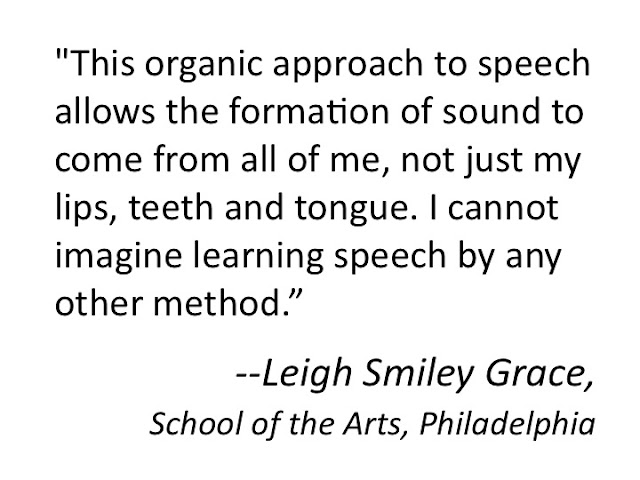 "Cannot imagine learning speech by any other method"? It’s not how I learned speech myself...
Somehow I fear I would not have been taken seriously if I had tried phonetic pillows with the students of linguistics and of speech therapy that I used to teach. But the drama students with whom I moonlighted when very young would have loved them.
EFL teachers, do you think your students would benefit from this method?
 One or two people have written to me to suggest that I discuss the English pronunciation of tsunami. I have not done so, because the matter has already been extensively aired on Language Log, including here.




 Posts
Posts

