skip to main |
skip to sidebar
Thanks to all commentators for the very useful responses to yesterday’s posting. I shall now with confidence add to the next edition of LPD (when and if there is one) as follows. uillean, uilleann ˈɪl ən ˈɪl jən — Irish [ˈɪ lʲənʲ ˈɪ lʲən]
While on the subject of Irish, I notice that on the American voice association’s email list a lady from Texas is asking about the pronunciation of the name of the western province of the Irish Republic, which she gives as Connaught.

Anybody out there know whether the emphasis in Connaught Province is on the second syllable? Pronunciations online seem to indicate a slight emphasis on the first syllable. My director, who lived in Ireland (but is in no way a vocal coach) seems to insist that the emphasis is on the second syllable.
Straightaway she got a reply from a voice teacher in Maryland. I have always heard it pronounced with the stress on the second syllable. The first syllable is not 'thrown away', but de-emphasized.
Interesting. See how what appears to be misinformation disseminates. Perhaps it is true that in America you “always” hear this name given second-syllable stress. But that’s not what you hear in Ireland, or indeed in Britain. The only pronunciation I have ever heard is ˈkɒnɔːt, with initial stress.
Wikipedia offers us a range of authentic-sounding possibilities, all with initial stress: Connacht (pronounced /ˈkɒnəxt/, /ˈkɒnəkt/ or /ˈkɒnɔːt/ —Irish: Connachta / Cúige Chonnacht —pronounced [ˈkɔnəxtə]), formerly anglicised as Connaught.
Indeed, we nowadays spell the name of this province as Connacht. We retain the old spelling in the case of the Duke of Connaught, a dukedom now extinct, and in various placenames and street names. The enquirer was talking about a play, A Lie of the Mind, whose author, Sam Shepard, no doubt uses the old spelling.
I suggest in LPD that for Connacht, though not for Connaught, we can reduce the second vowel to ə, as happens in Irish. Next time I ought to add the Irish-language pronunciation, too.
_ _ _
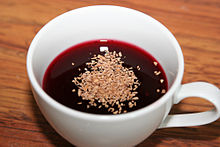
In the past I have congratulated the Guardian on its newly acquired ability to print letters bearing diacritics, not only for names and other words from French, German, Spanish and Portuguese, relatively familiar languages for us, but also from other languages that use the Latin alphabet (blog, 20 April 2010). Today, though, it slips. Simon Hoggart, in his always entertaining parliamentary sketch, fantasizes about the UK prime minister, excluded from hobnobbing with the big boys of the eurozone, having instead to dine (horror!) with Swedes and Poles, Hungarians and Latvians. (Even the Slovaks and Estonians are in the inner circle, but not us.)
 As any fule kno, these should be “żurek” and “blåbärssoppa” respectively. Though why someone might want three kinds of soup at the same time I have no idea.

_ _ _
I shall be away for the next two weeks. Next blog: 14 November.
 Let’s try a bit of crowd sourcing. How do we pronounce uillean or uilleann, as in uillean(n) pipes?
Please do NOT respond if you’re not familiar with this word. Tell me what you say ONLY if you have heard other people use it in English, and particularly if you commonly use it yourself in English.
If you are a speaker of Irish please tell me how you pronounce it in Irish, too.
I should explain that Nicholas Jones wrote to me pointing out that LPD doesn’t have ‘uillean (pipes)’, [a word] that is guaranteed to give English speakers problems. Collins English Dictionary gives only /'u:lɪən/. I may be wrong – I guarantee nothing – but I thought it was more commonly /'i:lɪən/.
In my reply I mentioned that Wikipedia says it’s pronounced ˈɪlən. This is also what is given on an American website for enthusiasts. I have now looked it up in the online OED, too, where I find the pronunciation given only as ˈɪljɪn.
 Etymologically, the word appears to be the genitive singular of the Irish word for ‘elbow’, variously given in the nominative singular as uillinn (my Learner’s English-Irish Dictionary, and online here) or uille (Wikipedia, the OED s.v. union pipes, and the image shown alongside). Another source says it is an adjective meaning ‘acute-angled, having a sharp elbow or angle’. However, as the Wikipedia article recounts, it is also possible that it is really a reworking of the English word union.
To hear what uillean pipes sound like, go here and follow the links on the righthand side; or here.
Meanwhile I’ll ask around at the EFDSS and the London Irish Centre.
 As regular readers will know, I am always on the lookout for English intonation patterns that are not predictable on the basis of the general rules we know about, and which I have attempted to record in my book English Intonation.
Each case that we discover can be seen as demonstrating the inadequacy of the existing rules. This is not something to be upset about. Rather, it helps us work towards a fuller account of the language and of what native speakers implicitly know about it.
Linguists are not content with vague hand-waving in the direction of ‘sprachgefühl’ every time we are faced with something we cannot explain. We seek a fuller, more principled account.
I’ve been thinking about the phrase I don’t know. Apart from its obvious use to say that one doesn’t know some fact or the answer to some question, we also sometimes use it to demur — that is, to show that we disagree slightly with what has just been said.
How do people typically demur? Politely. Politeness being what it is, we also use this phrase, in BrE at least, to show that we disagree strongly (rather than slightly) but don’t wish to enter into an immediate fierce argument.
Here’s LDOCE’s example of this usage (s.v. know 21 c).‘I couldn’t live there.’
‘Oh, I don’t know. It might not be so bad.’
What intonation would be appropriate for I don’t know in this sense?
I think it has to be a rise.
Oh, I ˌdon’t /know.
or
\Oh, | I ˌdon’t /know.
Ah, say followers of Brazil’s theories, that’s because we’re referring (to our lack of knowledge) rather than proclaiming it. To which I reply, but how do you know? Why should demurring be referential, whereas straightforward disagreement is proclamatory? It sounds nice as a post-hoc explanation, but if you were a NNS and needed to use this phrase — say, as an actor in a play — how would you know that a falling tone is inappropriate and that you should use a rise?
 What, if anything, do you understand by the term ‘incomplete plosion’?
It is a term not to be found, as far as I can see, in any work by Gimson, O’Connor, Cruttenden, Roach, Ladefoged, Collins/Mees or in fact any British phonetician later than Daniel Jones (but see below). It’s not in SID. I haven’t checked American sources, but I don’t think they use it either. So I was a little surprised when I found it in the draft of a textbook of English phonetics by a Chinese author that I was asked to read.When a plosive sound is immediately followed by another plosive sound, only the second plosive is fully exploded, but the closure of the first plosive sound (the 2nd stage of the first plosive) is held for double the usual time. This is known as incomplete plosion.
Examples given include such cases as the k acting ˈæktɪŋ or the ɡ in begged beɡd.
This is what I call ‘no audible release’ or ‘masking’ of a plosive. We also sometimes speak of ‘overlapping plosives’. Because of the supervening second plosive, the release of the first plosive in such sequences cannot be heard, being masked by the hold of the second plosive. Acoustically, what you get in ˈæktɪŋ is the formant transitions of a velar approach, a long silence (the double hold) and the formant transitions of an alveolar release. (The assertion that the first plosive is held for double the usual time is simply wrong.)
I do remember Gordon Arnold, one of my teachers at UCL, when I was studying phonetics as a postgraduate, telling me that the expression ‘incomplete plosion’ was strongly deprecated. The term ‘incomplete plosive’ was not quite so absurd, he said, but I should still prefer ‘plosive with no audible release’. I had the general impression that these were unfortunate Jonesian terms which his successors were trying to eradicate.
Accordingly, in my Practical Phonetics (with Greta Colson, Pitman, 1971, p, 73) I wrote Another term sometimes encountered, INCOMPLETE PLOSION, is misleading and best avoided.
In a quick search of Jones’s major works, however, I can find no instance of ‘incomplete plosion’, only ‘incomplete plosive (consonants)’, e.g. at §§578-585 in the 1957 edition of An Outline of English Phonetics. Under that heading Jones deals not only with masked release but also with what we might now call gemination, zero release or unreleased plosives, in homorganic plosive sequences such as red deer and eggcup.
A Google search for ‘incomplete plosion’ brings up an old lecture handout on Rachael-Anne Knight’s website, which wrongly defines the IPA diacritic [˺] as denoting ‘incomplete plosion’. (In the current IPA Chart it is defined as ‘no audible release’.) She includes not only acting but also cases such as take five, where ‘narrow release may also apply’ (???).
Apart from this one document from a NS phonetician, Google directs us to a Powerpoint presentation from Xi'an Jiaotong University and some Chinese instructional material on English phonetics.When a plosive consonant is immediately followed by another plosive, only the second plosive is fully exploded, the first plosive is incomplete. This is known as incomplete plosion, which often takes place at the junction of words.
For example:
actor doctor football black tea sit down a good teacher
1. They collected pennies. 2. She slept badly.
It would appear then that this terminology, obsolete or at least disfavoured among NS phoneticians, lives on in the local tradition of English phonetics in the People’s Republic.
 On Saturday I looked in at the London Language Show: 150 stands and three seminar rooms, exhibitors ranging from language schools to cultural bodies to publishers to travel agencies (they arrange student visits abroad). Over the three days of the show there were ‘taster’ sessions on Arabic, Czech, Chinese, Esperanto, Finnish, French, German, Greek, Hindi, Italian, Japanese, Korean, Polish, Portuguese, Russian, Spanish, Turkish, and British Sign Language, plus intensive classes in a subset of these and a whole range of seminars.
 On the CUP stand I was able for the first time to have a look at the new (18th) edition of the Cambridge EPD. Visually, the most striking change is that the coloured type in the body of the dictionary, blue-green (teal?) in the 17th edition, is now light brown (tan?). The contents include six short essays by outside contributors. Transcription-wise, the most important change is that words such as tune, duke now have the tʃ, dʒ form prioritized. This is what my own preference poll reveals to be the most widely preferred BrE form, but I still find it a bit shocking.
I noticed two exhibitors at the show specializing in offering pronunciation tuition. I was attracted to one stand by the large chart of phonetic symbols for English displayed — refreshingly error-free and well presented. The young lady on duty at that stand turned out to hold a master’s in Phonetics from UCL: this was after my retirement, so I had examined her but not taught her.
A difference from previous years was the unusually high profile presented by two particular languages: Polish and Mandarin Chinese.
All the more reason for us to drill our students diligently in the difference between ɕ, ʑ and ʂ, ʐ.
_ _ _
In a week I shall be off to Japan, for a conference in Kochi (here’s the programme). I hope to see some of you there. Afterwards I shall also be giving lectures in Osaka and Kyoto.
 Locals know how to pronounce the names of places, because they've often heard other people say them. Outsiders often get them wrong, because they rely on the spelling, which may be ambiguous and misleading.
Yesterday’s parliamentary debate on the collapse of the carbon capture scheme at Longannet was a case in point. Dictionaries will tell you that there is no ɡ in the pronunciation of this name. It is lɒŋˈænɪt (with appropriate possible variation in the exact vowel qualities). I don’t know the etymology, but this suggests that it consists morphologically of long plus Annet. The lack of phonetic g is parallel to its absence in long odds or long overdue. The only people from whom we would expect a velar plosive are those with the local accent of the patch of northwest England in which singer rhymes with finger.
But as I listened to Today in Parliament (BBC R4) yesterday evening I noticed that Chris Huhne and other MPs were calling it lɒŋˈɡænɪt, as if the second element were gannet. Huhne was born in an ‘affluent’ part of London and attended the fee-paying Westminster School. So an RP speaker, then. (It appears that his mother was an actress who supplied the voice for the speaking clock.)
There’s a good television clip here (sorry if it’s not available in your country). On it you hear both the Scottish reporter, several times, and a local manager pronounce Longannet without g, but Chris Huhne pronounce it with.
Another Scottish -ng- trap is Kingussie. It looks as if it ought to be kɪnˈɡʌsi (or kɪŋ-). But it isn’t, it’s kɪŋˈjuːsi. According to Wikipedia, it’s from Gaelic Ceann a' Ghiuthsaich ˈkʲʰaun̴̪ ə ˈʝuːs̪ɪç. (I think that’s a better order for the diacritics on k than the kʰʲ you see in Wikipedia: the palatalization applies to the whole initial plosive, aspiration only to its release.)
_ _ _
 Here's Paul Kerswill in today's Sun newspaper. An excellent example of the "impact" our paymasters now want English academics to achieve.
 One of my favourite examples of metathesis is the Modern Greek verb βγάλω vghálo ˈvɣalo ‘I take out’ (aorist form).
To see how it came about we first have to dispose of one or two other sound changes en route from classical to modern. In Ancient Greek this stem took the form ἐκβαλ- ekbal- eɡˈbal-. The voicing assimilation of the consonant in the prefix ἐκ- ek-, making it voiced before a voiced consonant, appears to date from ancient times — see W. Sidney Allen’s Vox Graeca (CUP 1987) p. 18.
Ancient short unstressed vowels at the beginning of a word are lost (‘aphesis’) in Modern Greek. So for example the classical word ὄμμα ómma ‘eye’, or rather its diminutive ὀμμάτιον ommátion, stripped of its case ending -ον -on, loses its initial vowel to become Modern Greek μάτι máti ˈmati, still meaning ‘eye’. Classical ἐξερῶ ekserô ‘I will speak out’ (?) yields Modern aphetic ξερώ ξέρω kséro ˈksero ‘I know’.
Classical voiced plosives became fricatives in Modern Greek (‘spirantization’). Loss of the initial vowel in ἐκβαλ- ekbal- eɡˈbal-, the example we started with, left an initial cluster ɡb-. This duly became ɣv-. It was this cluster that then underwent metathesis to give the modern vɣ-. I do not know when the metathesis happened in popular speech. It was resisted in the katharevousa (puristic) form of modern Greek.
No parallel metathesis seems to have happened to γδ- from classical ἐκδ-. Homer’s ἐκδύνω ekdúnō ‘I undress’ (as in modern English zoological ecdysis and fanciful ecdysiast) yields Modern Greek γδύνω ghdhíno ˈɣðino with the same meaning and unmetathesized.
I used to find Modern Greek useful for widening my students’ appreciation of the phonotactic possibilities of language, and there was usually a native speaker conveniently to hand. Clusters such as word-initial vɣ are not difficult, once you have mastered ɣ, but can seem very strange to speakers of other languages — all except those familiar with French, where initial vr vʁ is found in such everyday words as vrai ‘true’. From vʁ you just need to move the uvular articulation forward to the velar position.
Greek has other interesting word-initial clusters involving a fricative + obstruent: φτάνω ftáno ˈftano or φθάνω ftháno ˈfθano ‘I arrive’, βδομάδα vdhomádha vðoˈmaða ‘week’, χτές khtes xtes or χθές khthes xθes ‘yesterday’, χτυπώ khtypó xtiˈpo ‘I knock’, σχολείο skholeío sxoˈlio ‘school’, σγουρός sghourós zɣuˈros ‘curly’.
For really complex consonant clusters, however, you need to go to the Caucasian or Salishan languages. When I was teaching my phonological analysis class we never seemed to have any native speakers of those languages around.

 As any fule kno, these should be “żurek” and “blåbärssoppa” respectively. Though why someone might want three kinds of soup at the same time I have no idea.





 Posts
Posts

