Monday, 5 November 2012

Glis glis

An unusual rodent pest found in a part of Hertfordshire is the edible or fat dormouse. Its scientific name is Glis glis. It is the only living member of the genus Glis. This is perhaps why, unusually for biological nomenclature, it has a specific name identical with its generic name. The only other such cases I can think of offhand are the red fox, Vulpes vulpes, and the Eurasian wren, Troglodytes troglodytes.

The usual stress pattern for two-word names is double stressing (main stress on the second word), as in ˌHenry ˈSmith, ˌMerton ˈPark, ˌLyme ˈRegis. This also applies to the Latin names of plants and animals: ˌQuercus ˈrobur, Diˌcentra specˈtabilis, ˌEquus ˈzebra, ˌPasser doˈmesticus.

But in cases such as Vulpes vulpes, Troglodytes troglodytes and Glis glis this usual pattern collides with the deep-seated Germanic principle of deaccenting repeated material. So do we keep double stressing, or do we deaccent the specific and shift the main stress onto the generic?

In the case of the edible dormouse, discussants on a recent television programme went for the single stressing, pronouncing it furthermore as if it were a single word, a common noun, a ˈɡlɪsɡlɪs. Furthermore they treated this word as invariant for number, like sheep (see screenshot above). —Well, you’d hardly expect them to know that the Latin plural of glīs is glīrēs. That’s strictly for us classicist showoffs.

What do we do when referring to people whose forename is identical with their surname? What stress pattern do we use for someone called Morris Morris or Graham Graham? Do we find such names awkward? No, I think we cope and give them the usual double stressing. Same with New York, New York. So why is Glis glis different?

_ _ _

May I remind would-be commentators that I no longer allow anonymous or pseudonymous comments. Please sign with your true name. Unsigned comments will be deleted.

_ _ _

In a few days I shall be leaving for a visit to Japan and China. So this blog will be suspended now for the rest of November. Next posting: 3 Dec.

Friday, 2 November 2012

spell it out (cont.)

So, what is to be done? As David Crosbie indicated in his comment on the previous posting, Crystal has an upbeat message. Teachers of literacy must concentrate on the regularities, not on the anomalies.
  • Above all, they should not set students the dispiriting task of learning the spellings of lists of difficult words presented out of context.
  • The “short word rule” for content words accounts for the doubled consonants of inn, egg, add, odd, ill and the final e of eye, owe and bye. Compare function (non-content) words such as in, up, to, if, as, by.
  • Pay attention to stress, which explains the doubling of the consonants in preferring, preferred but not in proffering, proffered.
  • Be aware of the morphology (or that of the Latin origin), so as to understand, for example, the single b of aberrant (ab + errant) as against the doubling in abbreviate (ab+brev-). This even explains accommodate (ad (ac) + con (com) + mod-).

I would add the mnemonic value of related words, as when definition reminds us that definite is not *definate, while substantial and residential remind us how to spell the endings of substance and residence.

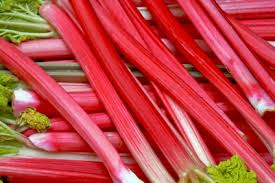
As far as reforming the system is concerned, Crystal declares baldly that “there can never be a simple solution to the problem of English spelling”. On the other hand he twice refers to the fact that Google shows the non-standard spelling rubarb to be increasingly common online. “If it carries on like this, rubarb will overtake rhubarb as the commonest online spelling in the next five years.” Then dictionary makers will “eventually have to recognise that a change has taken place” (as they already have in the case of miniscule replacing minuscule).

By this logic, dictionaries of the coming decade will also have to recognize seperate, tounge, accomodation and so on ("misspellings" very frequently encountered online), and abandon such distinctions as lose — loose, rein — reign, sight — site, to — too, your — you’re, its — it’s (all often confused on the web). Or perhaps ever more intelligent spell checkers and speech-to-text technology will prevent this from happening after all.

I think it’s important to recognize that planned, systematic reform is not truly impossible. Consider the case of the chemical element sulphur. That’s how it was standardly spelt, at least in the UK, until twenty years ago. But in 1990 the International Union of Pure and Applied Chemistry decided to adopt the spelling sulfur, and two years later the Nomenclature Committee of the Royal Society of Chemistry followed suit. In 1992 the Qualifications and Curriculum Authority for England and Wales recommended the f spelling, which is accordingly now found in textbooks and GCSE exams. I think it’s better for everyone to have an official change like this, so that we know where we are, rather than unofficial and chaotic rubarb-style changes.

Another similar example is the immunosuppressant drug of which the British Approved Name was formerly cyclosporin but is now ciclosporin. What used to be the correct spelling is now considered a mistake; what used to be a mistake is now correct. It might be better simply to allow both versions.

Unofficial changes do sometimes succeed, too, as with today, tomorrow, tonight, which have replaced the hyphenated to-day, to-morrow, to-night of my schooldays.

We could consider, for example, getting the QCA to make an official decision that all words with rh may alternatively be spelt without the h, just as we allow likeable alongside likable and (in Britain) organise alongside organize. That would take care not only of rhubarb but also of rheumatism, rhythm and rhino.

Wednesday, 31 October 2012

spell it out

I’ve been reading David Crystal’s new book Spell it Out. Like everything he writes, it is entertaining and well-informed, and thoroughly to be recommended.

The core of the book is a historical account of how our spelling ended up as the infuriating mess that it is. We have the Anglo-Saxon monks adapting the Latin alphabet to the sounds of Old English, bequeathing us the gn- of gnat and ways of coping with vowel length, with final e to show a long vowel and consonant doubling to show a short one (hence hope — hoping and hop — hopping). There were the Norman clerks faced with writing an unfamiliar language, experimenting with various possible solutions and hitting on such ideas as letter doubling to show the long vowels of deep and moon. There was even the monk Orrm who tried unsuccessfully to persuade everyone to adopt a more rational and systematic orthography. Meanwhile, our basically Germanic language had to digest thousands of new words of Romance origin, which meant for example that we applied the consonant doubling principle to show the Middle English pronunciation of various French-derived words (e.g. baggage).

Contemporary handwriting meant that vv looked confusingly like the w that had taken over from OE wynn (ƿ); so doubled v was avoided where it would otherwise have been called for, for example after the short vowel of loving (compare the single v of roving); meanwhile even single v was not at that time distinguished from u, so that lov looked like lou, which led to the adoption of a final silent e to show that there was a consonant sound at the end of love, have, give — leaving the anomaly that persists to this day when we compare these words with grove, rave, drive; and leading to the homographic ambiguity of live (which can be either the verb lɪv or the adjective laɪv).

Then came major sound changes, notably the Great Vowel Shift, which left us with sets of related words in which the common element is still spelt identically but nowadays pronounced very differently, and in which medieval scribes and printers opted to follow the sense rather than the sound: crime — criminal, type — typical, cave — cavity and so on.

Then came a concern for etymology. As Latin words were borrowed they kept their Latin spellings (hence single r in florid but double in horrid). The unpronounced etymological b was “restored” in debt and doubt and likewise the p in receipt, though not, for some reason, in the exactly parallel deceit and conceit. Somewhere along the line Flemish compositors decided to introduce an h into ghost.

(to be continued)

Monday, 29 October 2012

high head, falling head

When I received an email signed “Seeka You”, I assumed that this was a rather odd pseudonym used by someone reluctant to give their real name. I was accordingly disinclined to expend time and effort on a reply. But the person in question assures me that this is their true name. Anyhow, he/she had a question about intonation, which I had earlier failed to answer when it first reached me immediately after my stroke (at which time I was in no state to answer it).
In your book English Intonation, you follow the principle that “the high falling head is used only before a fall-rise nuclear tone” and “the high level head is used before all other nuclear tones”. I’ve listened closely to RP speakers in different styles of speech, and I can't seem to avoid the impression that most of the time (70%?), they use a falling head regardless of the nuclear tone; using a high level head seems to be very formal and infrequent even in fairly formal speech. Is my perception incorrect?

To explain: The head is the piece of the intonation pattern that extends from the first accent up to but not including the nuclear accent. Prenuclear patterns (and therefore heads) are one of the less important phenomena in the intonation of English (they don't seem to encode much meaning), and I therefore relegated the whole matter away from the core chapters of my book to chapter 5, “Beyond the three Ts”.

I think the last two sentences constitute a pedagogically justified simplification of the complex reality. In recording the copious spoken examples that accompany the text we found it easy and authentic-feeling to conform to it. The footnote to the last sentence you see above reads as follows.

But I am not aware of any corpus-based analysis that would enable us to judge whether this pedagogical simplification deviates seriously from actual usage. So I told S.Y.

I don't know. It’s an empirical question to which neither you nor I know the answer.
There’s perhaps also a question of definition: how much of a downward deviation from level has to be present in a high head before we categorize it as ‘high falling’?
I certainly don’t feel that high falling heads (as I perceive them) fit naturally for me before anything other than a fall-rise.

I might have added that this is in all likelihood one of the things that varies considerably between accents. High falling heads before a high-fall nuclear tone (which S. Y. claims to be so usual) would put me in mind of a Highland Scottish accent; they don’t feel at all right for my own speech.

Friday, 26 October 2012

biopic

An interesting misinterpretation of spelling from Richard Osman, the resident expert on the BBC1 programme Pointless: he referred to a baɪˈɒpɪk, that is a biopic, a film about someone’s life, a filmed biography. It is, of course, normally called a ˈbaɪə(ʊ)pɪk, being composed of bio- plus -pic(ture).

Given bionic baɪˈɒnɪk and myopic maɪˈɒpɪk ‘short-sighted’, you can understand where he was coming from. After all, biopic looks as if it contains the suffix -ic, which regularly throws the word stress onto the preceding syllable.

This word thus joins a list led (!) by misled (ˈmɪzl̩d instead of ˌmɪsˈled) and also containing items such as the seabed siːbd, infrared ɪnˈfreəd rays, and (my favourite) ˈsʌndrid (sundried) tomatoes.

Wednesday, 24 October 2012

slit fricative [t̞]

On a certain social networking site to which I belong, Tim Morley asked
Can someone explain to me, in terms of tongue position or whatever's relevant, the scouse allophone of /t/ that's a sibilant rather than a stop?
A French colleague asked me why a scouser had referred to "The Cass in the Hass", and although I believe I can perceive a difference in the cat-cass minimal pair through the scouse accent (i.e. I don't think it's just context that's allowing me to correctly interpret a homophone), I couldn't actually explain the difference that I believe I'm hearing, which kind of annoyed me to be honest!

So I said

It’s an alveolar slit fricative rather than plosive — a kind of lenition. It can be lenited in some words even further to [h]. See my blog for 15 Nov 2006.

Tim followed up with

By "slit", do you mean simply that there's "only a slit" (i.e. a very narrow gap) between tongue and alveolus? Or is there some fuller meaning that I'm not aware of?

So I clarified.

It means the space between the tongue tip/blade and the alveolar ridge is a left-to-right gap ("slit") rather than the front-to-back "groove" you get in [s]. [θ] and [ð] are dental slit fricatives, [s] and [z] are alveolar groove fricatives. The Scouse thing combines the shape of the first pair with the place of the second.

Then Tim discovered a Wikipedia claim that "no language is known to contrast a grooved and non-grooved sibilant".

Does this mean that Scouse would constitute a counterexample to this supposed universal and thereby disprove it? Hardly. I pointed out that

the nongrooved sibilant is not the default realization nor the most frequent realization of Scouse /t/. […The opposition exemplified in hit/hiss' operates] only in final or prevocalic position, and it’s not the only possibility even there. Note that in hit back (vs hiss back) you probably wouldn't get the slit fricative, but a no-audible-release [ʔ], [p] or [t].

Kevin Watson adds:

In a word like quite or internet you'd get a slit-t (of varying kinds, I've called them e.g. 'dynamic sibilants' and 'canonical sibilants' although I'm not happy with those terms) but in what or biscuit you'd get [h].

This same [] articulation of /t/ in postvocalic position is found in Irish English (“soft t”). Indeed, it’s one of the most indexical features of a (southern) Irish accent, and in Liverpool obviously derives from Irish influence.

Monday, 22 October 2012

the ending -d

Some of the unsolicited queries about English phonetics that I find in my inbox are easily answered. Zheng Yong’s was one such.
One book for Chinese Primary tells [= says] that "liked" is re[a]d /laikd/. What is your point [=opinion]?

I’m sure he really knew the answer already, so I made it short and sweet.

The book is wrong.

It's wrong because liked is pronounced laɪkt. The past ending -(e)d is pronounced as ɪd (or əd) when attached to a stem ending t or d, and otherwise as d with a stem ending in a voiced sound, but as t with a stem ending in a voiceless sound. So we have t in clapped klæpt, coughed kɒft, kissed kɪst, wished wɪʃt, touched tʌtʃt, and, yes, liked laɪkt.

That’s the story for students and teachers of EFL phonetics, anyhow. It is supported, for example, by the fact that missed is pronounced exactly the same as mist (both mɪst), while passed is a homophone of past, and backed rhymes exactly with act.

Those whom people in linguistics (not EFL) call phonologists, however, may argue that the underlying representation of liked is indeed /laɪk+d/ (or, for followers of Chomsky & Halle, the more abstract pre-GVS /līk+d/). They would say that the underlying representation of the past ending is /d/, but that an obligatory rule of voicing assimilation causes this /d/ to surface as [t] when attached to a stem ending in a [-voi] segment. Or, equivalently, that there is a constraint on the value of the feature [voi] that causes [-voi] to spread from the end of the stem to the end of the word. (For a worked example of this idea as applied to the English plural ending, see here.)

Be that as it may, I can’t end this little discussion without mentioning the many West African speakers of English who pronounce the ending as [d] after voiceless stems just as after voiced ones, and operate voicing assimilation in the other direction. That is, they pronounce kissed as kizd and liked as laigd. How widespread this is in Nigeria or Ghana I can’t say, but it certainly exists. All the same, I don’t think my Chinese correspondent would consider it relevant.